Understanding Rupee Cost Averaging: A Strategic Overview
When markets fluctuate wildly and investment timing feels like guesswork, Rupee Cost Averaging emerges as your steady financial compass. This disciplined investment strategy automatically smooths out market volatility by spreading your purchases across different price points, turning unpredictable market swings into your advantage.
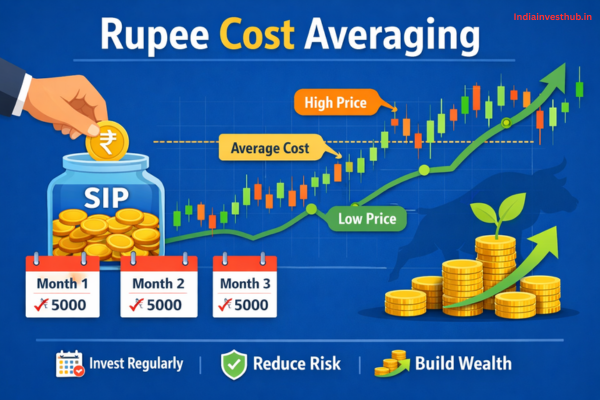
At its core, Rupee Cost Averaging works through a beautifully simple principle: you invest a fixed amount regularly, regardless of market conditions. When prices are high, your money buys fewer units. When prices drop, the same amount purchases more units. This automatic adjustment creates a balanced average purchase price over time, protecting you from the emotional rollercoaster of trying to time the market perfectly.
Think of it like filling your car’s gas tank every week with the same budget. Some weeks, gas prices are high and you get fewer gallons. Other weeks, prices dip and you fill up more. Over months, you’ve achieved a reasonable average price without stressing over daily fluctuations.
The strategy shines brightest during volatile periods, transforming market uncertainty from a source of anxiety into a systematic wealth-building opportunity. Rather than making large lump-sum investments that might hit at unfortunate timing, you’re consistently participating in market movements while reducing the impact of any single bad decision.
This methodical approach naturally leads us to examine how this concept translates into real-world investing through systematic investment plans.
Rupee Cost Averaging in Action: How It Works in SIPs
SIP Rupee Cost Averaging transforms theoretical investment strategy into practical wealth building through systematic monthly investments. When you set up a Systematic Investment Plan, you’re essentially putting rupee cost averaging on autopilot, investing a fixed amount regardless of market conditions.
Here’s how the mechanism works in practice: Your ₹10,000 monthly SIP purchases varying quantities of mutual fund units based on the Net Asset Value (NAV). When markets crash and NAV drops to ₹25, you acquire 400 units. During bullish phases when NAV rises to ₹50, the same investment buys only 200 units. This automatic adjustment ensures you buy more units when prices are low and fewer when prices are high – the fundamental principle that makes rupee cost averaging so effective.
The beauty lies in the mathematical averaging effect over time. Consider a 12-month period where NAV fluctuates between ₹20 and ₹60. Your consistent ₹10,000 monthly investment creates a average cost per unit that’s typically lower than the arithmetic mean of all NAV prices during that period. This happens because you naturally purchase larger quantities during market downturns when unit prices are depressed.
Most importantly, this strategy removes the emotional burden of market timing. You don’t need to predict whether markets will rise or fall next month – your SIP continues regardless, systematically building your portfolio through all market cycles. However, this mechanical approach isn’t without its critics and limitations.
Contrarian Views on Rupee Cost Averaging:
While mainstream financial advisors champion Rupee Cost Averaging as a foolproof strategy, some market experts raise legitimate concerns that deserve consideration before committing to long-term SIPs.
Market timing advocates argue that systematic investing ignores golden opportunities. During the 2020 market crash, lump-sum investors who deployed capital at rock-bottom prices significantly outperformed those following regular SIP schedules. Critics contend that disciplined investors with market knowledge can achieve superior returns by timing their entries strategically rather than averaging blindly.
The opportunity cost debate centers on cash allocation inefficiency. When markets trend upward for extended periods—like the post-2016 bull run—regular monthly investments mean holding cash that could have been deployed earlier at lower prices. This systematic approach potentially sacrifices returns in favor of emotional comfort.
Behavioral finance experts question whether Rupee Cost Averaging benefits actually reduce investor anxiety or simply create an illusion of safety. Some argue that investors become overly complacent, ignoring fundamental analysis and portfolio rebalancing because they believe averaging will solve all timing issues.
Tax efficiency concerns also emerge with systematic investments. Unlike lump-sum investments that offer clearer capital gains calculations, regular purchases create multiple cost bases, complicating tax planning, and potentially reducing after-tax returns. However, these contrarian perspectives often overlook the psychological and practical advantages that make rupee cost averaging accessible to everyday investors, regardless of market expertise.
Benefits of Rupee Cost Averaging: Why It Matters
Understanding the Rupee Cost Averaging meaning reveals why this strategy has become the backbone of successful long-term investing in India. The systematic approach offers multiple advantages that compound over time, making it particularly valuable for retail investors navigating volatile markets.
Risk Mitigation Through Timing Diversification:
The primary benefit lies in eliminating timing risk entirely. Instead of betting on market peaks and troughs, rupee cost averaging spreads investment timing across multiple market cycles. This approach reduces the impact of short-term volatility while capturing long-term growth trends, particularly crucial in emerging markets like India where price swings can be dramatic.
Disciplined Investment Habit Formation:
Automatic monthly investments through SIPs create powerful behavioral benefits. The strategy removes emotional decision-making from the investment process, preventing common mistakes like panic selling during market downturns or euphoric buying at market peaks. This systematic approach builds wealth through consistency rather than market timing skills.
Lower Average Cost Per Unit:
Mathematical precision drives this advantage: buying more units when prices are low and fewer when prices are high naturally reduces the average purchase cost. Over extended periods, this cost smoothing effect can significantly improve overall portfolio returns compared to lump-sum investing at unfavorable market timing.
These benefits position rupee cost averaging as a practical wealth-building foundation, though real-world application reveals additional nuances worth examining through specific success stories.
Industry Examples: RCA Success Stories
The power of Rupee Cost Averaging becomes evident when examining real-world scenarios that demonstrate its effectiveness across different market cycles. Consider a practical Rupee Cost Averaging example: An investor starting a monthly SIP of ₹10,000 in January 2020, just before the COVID-19 market crash.
During the initial months, when markets were at peak levels around 42,000 points, this investor purchased fewer units at higher NAVs. However, when markets crashed to 25,000 points in March 2020, the same ₹10,000 monthly investment bought significantly more units at discounted prices. As markets recovered through 2021-2022, reaching new highs, the investor’s average cost remained well below peak levels.
This scenario illustrates how systematic investing through market volatility can transform potential losses into opportunities. The investor who panicked and stopped investing during the crash missed the chance to accumulate units at lower prices, while the disciplined RCA practitioner benefited from market downturns.
Technology sector SIPs during 2021-2023 provide another compelling example. Investors who maintained consistent investments despite the sector’s dramatic swings – from pandemic highs to subsequent corrections – often found their average purchase price cushioned the impact of volatility.
These success stories share common threads: consistent investment discipline, long-term perspective, and the patience to let market cycles work in their favor. However, while these examples highlight RCA’s potential benefits, it’s important to understand that this strategy also comes with certain limitations worth considering.
Limitations and Considerations of Rupee Cost Averaging:
While Systematic Investment Plan averaging offers compelling benefits, understanding its limitations ensures realistic expectations, and better investment decisions. Like any investment strategy, rupee cost averaging isn’t a magic solution that guarantees profits or eliminates all risks.
Market Timing vs. Long-Term Returns
The primary limitation lies in opportunity cost during consistently rising markets. When markets trend upward without significant corrections, investing a lump sum at the beginning would generate higher returns than spreading investments over time. RCA’s strength in volatile markets becomes a disadvantage in steadily bullish conditions, where delayed investment means missing out on early gains.
Discipline Requirements Often Overlooked
Success with rupee cost averaging demands unwavering discipline, which many investors underestimate. Market downturns trigger emotional responses that lead to pausing or stopping SIPs precisely when RCA’s benefits are most pronounced. Without consistent contributions during market lows, the strategy loses its core advantage of buying more units at lower prices.
Not a Risk Elimination Strategy
RCA reduces volatility impact but doesn’t eliminate investment risk. The underlying asset’s performance ultimately determines returns, regardless of the averaging strategy. Poor fund selection or investing in declining sectors can result in losses despite consistent rupee cost averaging.
However, these limitations shouldn’t overshadow RCA’s proven effectiveness for most retail investors. Understanding these considerations helps set appropriate expectations while recognizing common misconceptions that can derail investment success.
Common Misconceptions About Rupee Cost Averaging:
Despite its widespread adoption, several misconceptions surround rupee cost averaging that can lead to unrealistic expectations or poor investment decisions. Understanding these myths helps investors maintain a balanced perspective on this investment strategy.
Myth 1: RCA Guarantees Profits One prevalent misconception is that rupee cost averaging automatically ensures profitable outcomes. In reality, fixed amount investment through systematic plans doesn’t eliminate market risk—it merely spreads it across time. If markets decline consistently over your investment horizon, your portfolio will still experience losses, regardless of the averaging effect.
Myth 2: It Always Beats Lump Sum Investing Many investors believe RCA universally outperforms lump sum investments. However, in steadily rising markets, lump sum investing typically delivers better returns since you benefit from earlier market exposure. The effectiveness of rupee cost averaging depends heavily on market conditions and timing.
Myth 3: Timing Doesn’t Matter While RCA reduces timing risk, it doesn’t eliminate it entirely. Starting your systematic investment during market peaks versus valleys can significantly impact long-term returns. Additionally, the frequency and duration of your investments still influence outcomes.
Myth 4: It Works for All Investment Horizons Some investors expect RCA benefits to materialize quickly. In practice, the averaging effect requires sufficient time and market volatility to demonstrate its value, making it less effective for short-term investment goals.
Understanding these limitations sets realistic expectations for your systematic investment journey.
Key Takeaways:
Rupee cost averaging stands as a cornerstone strategy in systematic investing, offering a disciplined approach that benefits both novice and experienced investors. The mechanism naturally ensures you buy more units low price while purchasing fewer units during market highs, creating an inherent risk management system.
The power lies in its simplicity. Regular investments of fixed amounts automatically harness market volatility to your advantage, removing the impossible task of timing market movements perfectly. This strategy particularly shines during extended market downturns, where consistent investments accumulate substantial units at attractive valuations.
However, success requires patience and discipline. The benefits compound over time, making rupee cost averaging most effective for long-term financial goals spanning five years or more. Market volatility becomes your ally rather than your enemy when you maintain consistent investment behavior.
Critical considerations include understanding that this strategy doesn’t guarantee profits or eliminate losses entirely. It works best in volatile markets but may underperform lump-sum investments during sustained bull runs. The key is matching this approach with your risk tolerance, investment horizon, and financial objectives.
Most importantly, rupee cost averaging transforms investing from an emotional, timing-dependent activity into a systematic, behavior-driven process that builds wealth steadily over time.
FAQs – Rupee Cost Averaging
Q1: Can I lose money with rupee cost averaging?
👉Yes, rupee cost averaging doesn’t guarantee profits or protect against losses in declining markets. If the overall market trend is consistently downward, your investments will still lose value despite the averaging effect. However, the strategy helps reduce the impact of volatility compared to lump-sum investing during turbulent periods.
Q2: How much should I invest monthly through SIP?
👉The ideal SIP amount depends on your financial goals, income, and expenses. A common approach is investing 10-20% of your monthly income, but start with an amount you can comfortably sustain long-term. Remember, consistency matters more than the absolute amount when leveraging rupee cost averaging.
Q3: Is rupee cost averaging better than lump-sum investing?
👉Neither strategy is universally superior. Lump-sum investing typically performs better in consistently rising markets, while rupee cost averaging shines during volatile periods. The choice depends on your risk tolerance, investment timeline, and market conditions.
Q4: Can I apply rupee cost averaging to individual stocks?
👉Yes, but it requires more discipline and research compared to mutual fund SIPs. You’ll need to manually execute regular purchases and ensure proper diversification across different stocks and sectors.
Q5: What happens if I miss a few SIP installments?
👉Missing occasional payments won’t derail your strategy, but frequent interruptions reduce the effectiveness of rupee cost averaging. Most fund houses allow temporary pauses, making it easier to maintain long-term consistency.