Litecoin (LTC) is one of the oldest and most trusted cryptocurrencies in the market, often called the “silver to Bitcoin’s gold.” Launched in 2011, Litecoin was created to solve some of the common problems people noticed in Bitcoin—like slow transaction speed and higher network fees during busy times. Because of its faster block time and efficient technology, Litecoin became popular as a digital currency for quick payments, peer-to-peer transfers, and everyday crypto transactions.
Over the years, Litecoin has built a strong reputation for security, stability, and long-term survival in the ever-changing crypto space. Many investors also see LTC as a potential long-term asset because it has a limited supply, strong liquidity, and wide exchange availability. In this article, you’ll clearly understand what Litecoin (LTC) is, how it works, where it’s used in real life, its key benefits, and what the future outlook could look like for Litecoin in the coming years.
Table of Contents
What Is Litecoin (LTC)?
Litecoin (LTC) is a decentralized cryptocurrency and open-source blockchain project launched in 2011. It is often described as the “silver to Bitcoin’s gold” because it shares many similarities with Bitcoin, but with a few key improvements meant for faster day-to-day use. Litecoin is designed to be a peer-to-peer digital currency for quick, low-cost payments across the internet.
Litecoin’s network runs on proof-of-work (PoW) mining, which means miners validate transactions and secure the blockchain using computing power. It also uses the Scrypt hashing algorithm instead of Bitcoin’s SHA-256, which originally aimed to make mining more accessible (though mining has still become ASIC-dominated over time).
For investors, Litecoin’s biggest advantage is that it’s a battle-tested asset. It has been traded for more than a decade, supported by major exchanges, and recognized across the crypto ecosystem.
Who Created Litecoin and Why Was It Launched?
Litecoin was created by Charlie Lee, a former Google engineer who later worked at Coinbase. He released Litecoin in October 2011 and positioned it as a complementary version of Bitcoin—built for faster transactions and smaller payments, not necessarily to replace Bitcoin.
The idea behind Litecoin was simple and smart:
- Bitcoin is great as a store of value
- But payments should be faster and cheaper
- Litecoin could help fill that role
This “Bitcoin but faster” design made Litecoin one of the earliest and most successful altcoins in crypto history.
How Does Litecoin Work? Blockchain, Mining, and Transactions Explained
Litecoin works very similarly to Bitcoin:
- Transactions are grouped into blocks
- Miners compete to solve a cryptographic puzzle
- The network confirms blocks and secures the ledger
The biggest technical difference is block time.
Litecoin produces a new block approximately every 2.5 minutes, while Bitcoin takes about 10 minutes per block.
That shorter block time makes Litecoin transactions confirm faster, which is useful for payments. Litecoin’s mining rewards also follow a halving schedule (more on that soon), meaning new supply reduces over time.
Litecoin vs Bitcoin — Key Differences in Speed, Fees, and Supply:
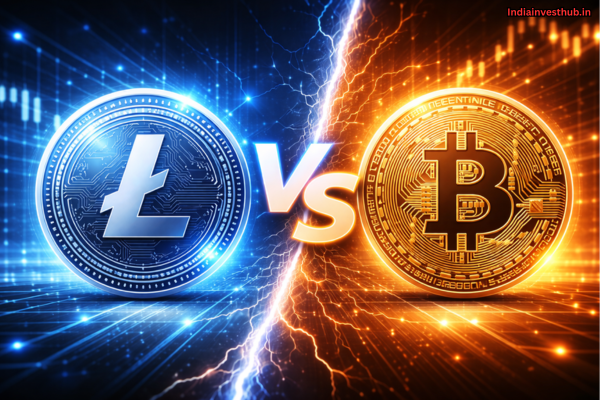
Litecoin and Bitcoin are like two versions of the same core idea, but optimized differently.
Here are the key differences investors should know:
- Block time
- Litecoin: ~2.5 minutes
- Bitcoin: ~10 minutes
- Maximum supply
- Litecoin: 84 million LTC
- Bitcoin: 21 million BTC
- Mining algorithm
- Litecoin: Scrypt
- Bitcoin: SHA-256
Because Litecoin has 4x the supply and faster blocks, it is often positioned as a more practical coin for payments while Bitcoin remains the dominant store-of-value asset.
What Is Litecoin Used For? Real-World Use Cases Explained
Litecoin’s usefulness is not based on complicated smart contracts or trendy narratives—it’s built for speed, simplicity, and payments.
Some real-world Litecoin use cases include:
- Fast peer-to-peer transfers
- Cross-border payments with low fees
- Merchant payments (where supported)
- Exchange trading and liquidity access
Because Litecoin is listed almost everywhere, it’s commonly used by investors who want to move funds quickly between platforms.
From an investor perspective, this utility helps Litecoin stay relevant even when markets shift.
Litecoin Transaction Speed and Low Fees — Why It’s Still Popular:
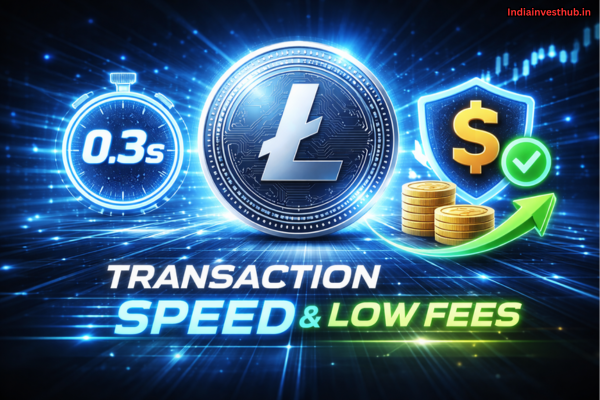
One reason Litecoin remains popular is that it offers:
- Faster transaction confirmations
- Generally low network fees
- Wide exchange support
- Strong uptime and stability
Even today, Litecoin is often chosen when investors want a reliable blockchain that “just works” without huge network congestion.
Also, Litecoin has become known for being a “simple crypto” that doesn’t break things too often—and that stability can be underrated in the crypto world.
Benefits of Litecoin (LTC): Security, Reliability, and Adoption
Litecoin’s biggest benefits for investors are not flashy—they are practical:
✅ Long track record: launched in 2011 and still active
✅ Fixed maximum supply: 84 million cap supports scarcity
✅ Fast confirmations: better user experience for payments
✅ Mining-based security: proven proof-of-work model
✅ High liquidity: widely traded and listed
For long-term investors, reliability matters. Litecoin has survived multiple market cycles and remains one of the most recognized cryptocurrencies worldwide.
Is Litecoin a Good Investment? Risks, Volatility, and Market Trends
Now the honest investor question: Is Litecoin still a good investment?
Litecoin can be a strong addition to a crypto portfolio, but it depends on your goals.
Reasons investors like LTC:
- It’s established and widely adopted
- It can benefit from crypto market cycles
- It’s often viewed as undervalued in certain cycles
Risks investors must consider:
- Litecoin competes with faster networks and stablecoin payments
- It doesn’t have the same “ecosystem growth” narrative as Ethereum or Solana
- Like all crypto, it can be very volatile
LTC tends to move with the overall market—so it often rises in bull markets and falls hard in bear markets.
Litecoin Price History — Major Highs, Lows, and Key Market Cycles:
Litecoin has experienced major boom-and-bust cycles similar to other large cryptocurrencies:
- Rapid rallies during bull markets
- Big corrections during bear markets
- Long consolidation phases
For investors, this is why timing and risk management matter. Litecoin is not a stable asset—it’s a high-risk, high-volatility investment.
However, its long survival also proves that it’s not just a short-lived trend.
Litecoin Future Outlook (2025–2030): Growth Potential and Predictions
Litecoin’s future potential depends on a few key drivers:
1) Scarcity + Halving Cycles
Litecoin has a built-in halving system that reduces miner rewards every 840,000 blocks. The next Litecoin halving is expected in 2027, reducing rewards again.
Historically, crypto halvings tend to increase attention and often support long-term price strength—though nothing is guaranteed.
2) Payments Narrative
If crypto payments grow globally, Litecoin could benefit because it’s fast and cheap.
3) “Legacy Coin” Trust
Older networks can sometimes win simply because they are widely integrated and trusted, especially when investors want simpler assets.
Still, Litecoin must continue proving it has real demand beyond just “it’s been around forever.”
FAQs — Litecoin (LTC)
Q1: What is Litecoin (LTC) in simple words?
👉Litecoin is a digital currency designed for fast, low-cost payments and transactions, running on its own blockchain secured by proof-of-work mining.
Q2: Is Litecoin faster than Bitcoin?
👉Yes. Litecoin produces blocks every 2.5 minutes, while Bitcoin takes about 10 minutes, so Litecoin confirmations are usually quicker.
Q3: What is the maximum supply of Litecoin?
👉Litecoin has a maximum supply of 84 million coins, which makes it a scarcity-based crypto asset.
Q4: Who created Litecoin?
👉Litecoin was created by Charlie Lee, who launched it in 2011 as a faster, low-fee alternative to Bitcoin for smaller transactions.
Q5: When is the next Litecoin halving?
👉The next Litecoin halving is expected in 2027, when the mining reward will be reduced again.
Conclusion:
Litecoin is one of the few cryptocurrencies that has truly stood the test of time—built for speed, low-cost transactions, and long-term reliability. Its capped supply of 84 million, faster block time, and proven network security make it attractive for investors who prefer established digital assets over experimental coins. At the same time, Litecoin still faces real competition from newer ecosystems, changing payment trends, and evolving investor attention.
If you’re building your crypto portfolio for the coming years, the real question is—does Litecoin fit your strategy as a reliable long-term asset, or are you looking for faster-growing opportunities instead?