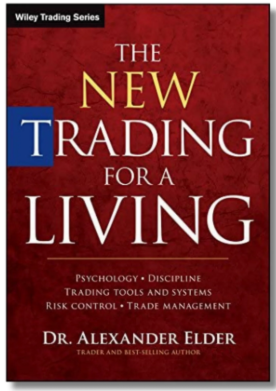
Imagine you’re seated in a bustling trading room, monitors flashing, the market humming with opportunity—and you’re grappling with your own emotions: fear, greed, hesitation. That was how I felt when I first cracked open The New Trading for a Living by Dr. Alexander Elder—and it’s precisely the reason you’re here. You want to know whether this book can truly help you navigate the trading world with greater clarity. At IndiaInvestHub, we aim to help readers like you get straight to the heart of such trading‑literature, and in this review you’ll find an approachable summary, the key lessons, and how they apply to today’s markets.
About the Author – Dr. Alexander Elder’s Legacy in Trading Psychology
Dr. Alexander Elder began his professional life as a psychiatrist—trained to probe human behaviour and decision‑making—and later turned those skills to trading. His journey from medical school in Estonia to trading and teaching in New York City gives him a distinctive edge: he views the markets not just as charts, but as human stories. His prior best‑seller, Trading for a Living (1993), left an indelible mark on aspiring traders; this updated edition is billed as “two decades smarter.” So when you pick up The New Trading for a Living, you’re tapping into the experience of someone who blends market mechanics with psychology.
Overview of the Book – What’s Inside
The New Trading for a Living (2014 version) covers four key pillars: psychology, trading tactics/systems, risk and money management, and record‑keeping/self‑evaluation. It is designed for traders who want more than just “here’s a pattern to trade”—it seeks to build your mindset, your discipline, and your system. The book includes full‑colour updated charts and modern templates—clearly intended to bring older wisdom into contemporary markets. If you’re a reader looking for both the why and the how of trading, this book positions itself as a complete guide.
🔗 Buy on Amazon
Price Range in India: ₹4,010 – ₹6,010
Core Lesson 1: Mastering Trading Psychology

Dr. Elder argues that trading success depends more on the mind than on any indicator. As he says, “Technically, trading isn’t very hard. Psychologically, it’s the hardest game on the planet.” He encourages you to recognise emotions like fear and greed, to view trading as dealing with your own behaviour as much as the market’s. For example: he emphasises that losing money is akin to an addiction, meaning you need to treat risk management and mindset with the seriousness of mental health. In short: Without self‑discipline and emotional control you won’t consistently succeed, no matter how good your system.
Core Lesson 2: Building a Profitable Trading System
Once psychology is addressed, the book moves into methods and tactics. You’ll find explanation of support/resistance, trendlines, moving averages, indicators like MACD/RSI, and even volume ones. Importantly, Elder introduces the “Triple Screen” system (using different time‑frames) and his own indicators (e.g., the Elder‑Ray). The key takeaway: don’t trade on a whim—trade based on rules you define and test. The New Trading for a Living gives you templates to build your own system rather than copying someone else’s blindly.
Core Lesson 3: Risk Management and Money Management
Elder’s risk rules stand out for their clarity: the “2% rule” (never risk more than 2% of your account on any single trade) and the “6% rule” (if total risk plus losses for the month exceed 6%, stop trading for the month). He argues that many retail traders are slaughtered not by one big loss but by many small ones—and proper money management is what keeps you in the game. For readers in India or elsewhere, this translates to defining position‑sizes, stop‑losses and knowing ahead of time how much you are willing to lose—so that one bad streak doesn’t wipe you out.
Core Lesson 4: Record‑Keeping and Self‑Evaluation
This pillar is frequently overlooked in trading literature, but in The New Trading for a Living it gets a dedicated chapter. Elder provides methods for journaling trades, rating your trades beforehand (“Am I ready to trade?” test), and post‑trade evaluation (“Trade Apgar” score) so you learn from what happened. The logic: if you don’t record and review your trades, you are not improving. If you’re serious about trading long‑term, this discipline is what separates hobbyists from professionals.
Strengths of the Book – What Makes It Stand Out
- Holistic approach: Instead of just showing chart patterns, the book covers the whole ecosystem of trading: mind + method + money + measurement.
- Accessible for beginners: Many reviewers say even novices can follow the clear language.
- Modernised edition: Although based on earlier work, this version is updated with full‑colour charts and contemporary examples.
- Practical templates: The inclusion of ready‑to‑use tools (trade journal forms, system checklists) means readers can start applying immediately.
For readers looking for more than just “trade this indicator”, this book delivers a framework you can adapt.
Weaknesses or Limitations – Where It Falls Short
- Still somewhat dated: While revised, parts of the book retain older‑market references. One review complained that some techniques are less relevant to today’s algorithm‑driven, high‑speed markets.
- Not ultra‑specialised: It doesn’t provide deep coverage of ultra‑specific markets like cryptocurrencies or ultra‑short‑term high‑frequency trading.
- Cold teaching style: Some readers say the writing, while clear, can feel like a lecture rather than engaging storytelling. In sum: if you’re seeking a cutting‑edge, ultra‑niche system for day‑trading in exotic markets, this book may feel foundational rather than advanced.
Top 10 Technical Analysis Books Every Trader and Investor Should Read
Key Takeaways for Modern Traders:
- Mindset matters first: Before you find the “perfect” system, ensure you have discipline and emotional awareness.
- Define your rules: Your trading system must be your own, clear, tested and aligned with your style and capital.
- Protect your capital: Implement the 2% and 6% rules to ensure no single trade or month kills your account.
- Keep a journal: Record every trade with reasons, entry, exit, outcome—and review regularly.
- Adapt to your market: While the book offers generic frameworks, you’ll need to tailor them to your region (for example, Indian equities or NSE derivatives) and to the speed of today’s trading.
Top 5 Best Books to Learn Fundamental Analysis
FAQs – The New Trading for a Living by Dr. Alexander Elder
Q1: Who is this book for?
👉High‑schoolers through advanced retail traders. If you’re serious about trading—not just speculating—it fits.
Q2: Does it teach a guaranteed profitable system?
👉No. It teaches you how to build a system, manage risk and discipline yourself. It doesn’t guarantee outcomes.
Q3: Is it relevant for Indian markets?
👉Yes. The principles of psychology, risk and system design are universal. You’ll want to adapt the market‑specific tactics (stocks, futures, options) to the Indian context.
Q4: Does it cover algorithmic trading or HFT?
👉No, that’s not the focus. Some reviews note it lacks deep content on ultra‑modern automated systems.
Conclusion:
The New Trading for a Living offers a rare blend of psychological insight, trading‑system design, risk control and disciplined self‑evaluation—making it a valuable resource for traders who want to build something lasting. While it may not specialise in the very latest ultra‑rapid algorithmic methods, its foundational lessons remain highly relevant. If you’re ready to shift from casual trading to structured, mindful practice, this book deserves your attention.
So, are you ready to take your mindset seriously and build a system that survives when the markets test you?