
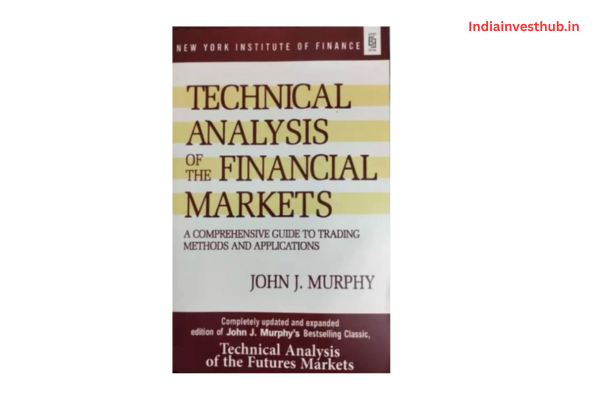
a novice trader, eyes glued to multiple price charts, trying to make sense of erratic market swings. Every sudden spike and dip stirs hope—or fear. Then they pick up Technical Analysis of the Financial Markets and discover that what felt random actually has structure: trends, support and resistance zones, momentum oscillators. That revelation—that even chaos has patterns—is the kind of “Aha!” moment Murphy delivers.
For anyone who wants to know the ins and outs of Technical Analysis of the Financial Markets, this book matters because it doesn’t just teach how to use indicators—it shows why they work, and under what conditions they may fail. At Indiainvesthub, we help readers by breaking down dense chapters into bite-sized mini-lessons, connecting Murphy’s principles with the Indian markets, and offering example charts so you don’t have to decipher his book alone.
About the Author – John J. Murphy
John J. Murphy is a veteran technical analyst, formerly with CNBC and director of Merrill Lynch’s Technical Analysis Futures Division. He has authored over 20 books on market analysis, and for his contributions was honored by the International Federation of Technical Analysts (IFTA) and the Market Technicians Association.
Murphy is particularly known for popularizing intermarket analysis—the method of comparing equities, bonds, commodities, and currencies to find correlations and lead/lag signals. His reputation and real-world experience lend credibility to the methods he presents in this book.
Technical Analysis of the Financial Markets: An Overview
Technical Analysis of the Financial Markets is structured to take you from foundational principles to advanced techniques. It begins with the philosophy of technical analysis—like the notion that “market action discounts everything” and that prices move in trends—and then walks through chart types, trend analysis, patterns, indicators, and methods to integrate them.
In the second (revised) edition, Murphy added sections on candlestick charting, intermarket relationships, sector rotation, and updated examples that reflect computer-assisted charting environments. He also emphasizes how to use multiple time frames and combine indicators sensibly rather than layering everything at once.
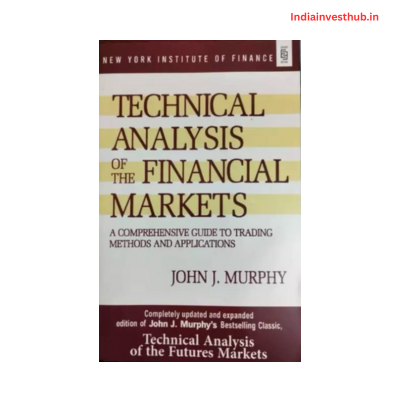
🔗Buy on Amazon
Price Range in India: ₹2,099 – ₹2,499
Key Concepts and Insights Explained:
- Trend is your friend: Murphy underscores that identifying the primary trend is more important than short-term noise.
- Support / Resistance zones: Recognizing zones where price historically reversed helps define trade entries and exits.
- Indicators must match market regime: For example, a momentum oscillator works better in trending markets; in sideways markets it may lag or whip you out.
- Intermarket relationships: For instance, bond yields, commodities, and currencies often lead or confirm equity moves.
- Multiple time frame analysis: Use weekly charts to set direction, daily charts for execution.
- Risk management & discipline: He dedicates sections to how much to risk per trade, and how to avoid overtrading.
One interesting side note: Murphy’s “Ten Laws of Technical Trading” are often quoted in trading circles as guiding axioms.
Why Traders Consider It the “Bible of Technical Analysis”:
There’s a reason many traders refer to Murphy’s work as the “Bible” of technical analysis:
- Breadth and depth: Unlike books that cover only one class of indicators (like only candlesticks or only momentum), Murphy brings nearly everything under one roof.
- Timeless principles: The core philosophies—trend, support/resistance, price action—remain relevant even as markets evolve.
- Clarity of explanation: Even complex topics are explained with charts, examples, and stepwise logic.
- Widespread adoption: Many charting platforms and trading courses cite or base lessons on Murphy’s frameworks.
Pros:
- Comprehensive and systematic—serves as a one–stop reference
- Clear, logical progression from basics to advanced
- Real charts and examples make it practical
- Emphasis on integrating various tools rather than overloading
Cons:
- Dense and long—some readers find the pacing slow
- Since many ideas are foundational, advanced traders may find fewer new revelations
- In the current algorithmic era, some mechanics feel dated (though the core ideas hold)
- It assumes some charting comfort—you may need supplemental practice
Real Reader Experiences:
👉“This book has given me a very basic understanding of most technical tools and their types. It was also very easy to understand.”
👉“The concepts are explained in a very simple manner, providing a solid foundation for trading. After reading this book, one can trade more confidently after building their own system.”
Top 10 Technical Analysis Books Every Trader and Investor Should Read
Technical Analysis of the Financial Markets vs Other Technical Analysis Books – Comparison Table
Book Title | Image | Author | Strengths | Weaknesses | Ratings | Buy |
|---|---|---|---|---|---|---|
Technical Analysis of the Financial Markets | 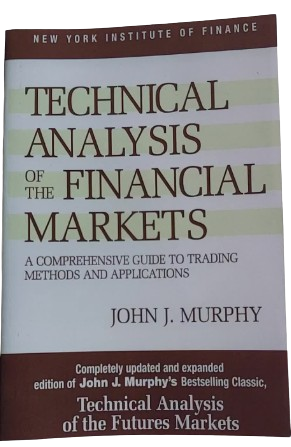 | John J. Murphy | Comprehensive, covers all major tools, intermarket insights | Slightly dated examples, lengthy read |  4.4/5 | |
Technical Analysis Explained |  | Martin J. Pring | Strong fundamentals, good for intermediate traders | Less focus on multi-asset analysis | 4.6/5 | |
Japanese Candlestick Charting Techniques | 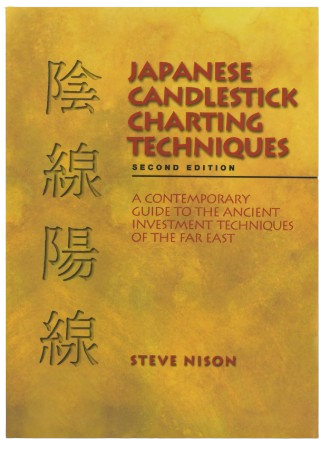 | Steve Nison | Deep focus on candlestick patterns | Limited to pattern study only | 4.5/5 | |
Encyclopedia of Chart Patterns | 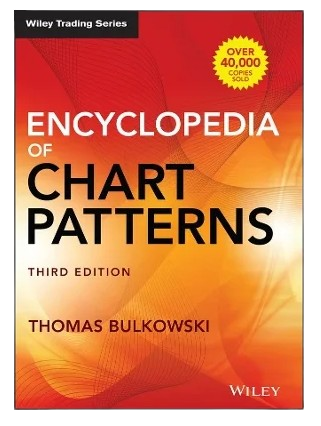 | Thomas Bulkowski | Statistical data on pattern success rates | Too research-heavy for beginners | 4.5/5 | |
Trading in the Zone | 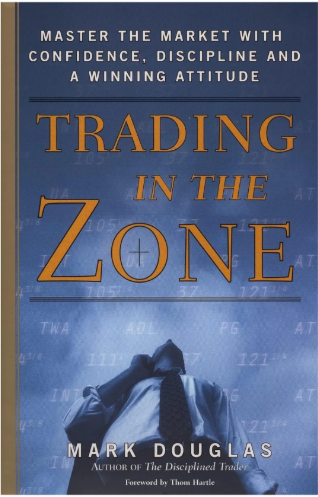 | Mark Douglas | Focuses on trading psychology | Minimal technical content | 4.5/5 |
Who Should Read This Book?
If you want to know Technical Analysis of the Financial Markets, this book is ideal for:
- Traders new to charting who want a complete, structured foundation
- Intermediate traders who want to systematize or revisit fundamentals
- Analysts or investors interested in applying technical methods to multiple asset classes
- Anyone looking for a reference manual to consult repeatedly
If you already rely heavily on algorithmic models or have advanced quantitative skills, this book may feel introductory in some parts—but it still offers perspective and reinforcement.
Top 5 Best Books to Learn Fundamental Analysis for Beginners and Investors
Key Takeaways – Lessons Every Trader Can Apply
- Define the primary trend before trying to trade within it.
- Combine tools smartly, not arbitrarily stacking every indicator.
- Price action always trumps indicators—let price guide your logic.
- Watch intermarket signals; they often foreshadow shifts.
- Use multiple time frames to align high-level direction and execution.
- Respect risk control—losses come; limit them.
- Practice discipline and patience—stop chasing setups.
FAQs – Technical Analysis of the Financial Markets
Q1: Is this book suitable for absolute beginners?
👉Yes—Murphy starts from basic definitions and builds upward, though it helps if you already have one or two charts open for hands-on practice.
Q2: Does it cover algorithmic or quantitative strategies?
👉Not in depth. It’s more focused on classical technical methods. Many quant traders complement it with more math/stat books.
Q3: Is the book still relevant in modern markets?
👉Largely yes. The principles endure, though some higher-frequency or machine-learning tactics go beyond its scope. Some readers comment that parts feel dated.
Q4: How does this book compare to reading content online or free charting tutorials?
👉The difference lies in logical structure and integration. Online pieces tend to isolate one pattern or indicator; Murphy unifies them into a system.
Q5: Will it turn me into a winning trader?
👉Not alone—any book is a tool, not a guarantee. Success requires practice, discipline, risk management, and emotional control. But this book gives you the map; you still have to walk the path.
Conclusion:
Technical Analysis of the Financial Markets by John J. Murphy remains a bedrock of technical trading education—a comprehensive manual that bridges theory and application. For readers seeking clarity on charting, trend analysis, indicator logic, and intermarket insights, it offers both depth and structure.
But as the markets evolve, are you ready to pair timeless principles with real-time adaptation?


