Blockchain Technology is no longer a buzzword reserved for tech enthusiasts — it has become a structural pillar in reshaping how global financial systems operate. From speeding cross-border payments to reimagining how contracts are executed, this distributed ledger innovation is steadily finding firm footing across banking, trading, insurance, asset management, and capital markets. For investors focused on future growth opportunities, understanding blockchain’s foundational impact on these financial pillars can mean the difference between staying ahead or falling behind in an increasingly digitized economy.
According to market research, the global blockchain in banking and financial services market is projected to grow at a compound annual growth rate (CAGR) of 52.9% between 2024 and 2029, rising from about $7 billion in 2024 to over $58 billion by 2029, highlighting explosive sector adoption.
Let’s explore how blockchain technology is transforming the financial world — with an investor’s lens — covering real applications, risks, and why this shift could open new avenues for capital allocation.
From Ledgers to Blockchains: Reinventing Financial Record-Keeping
For decades, financial record-keeping relied on centralized ledgers maintained by single institutions — banks, custodians, or clearinghouses. These systems were expensive, vulnerable to single points of failure, and required multiple reconciliations among intermediaries.
Blockchain Technology removes intermediaries by creating a decentralized, shared ledger where all participants can verify transactions independently. This innovation delivers increased transparency, traceability, and immutability, enabling faster verification of financial histories while reducing reconciliation costs and errors.
One academic review highlights blockchain’s early successes in reducing transaction costs by more than 40% and cutting cross-border processing times by over 78% in pilot implementations — evidence of how ledger digitization translates to operational efficiency.
For investors, the implications are significant: lower cost structures across banking and finance could translate into improved profit margins for firms adopting blockchain-enhanced infrastructure.
Decentralized Finance (DeFi): The New Alternative to Banks and Financial Institutions
Blockchain’s impact is nowhere more visible than in the rise of Decentralized Finance (DeFi) — an ecosystem that recreates traditional financial services such as lending, borrowing, trading, and yield generation without centralized intermediaries.
Built on smart contracts and decentralized networks, DeFi platforms allow users to participate in financial activities directly. Instead of routing every trade or loan through centralized institutions, the rules are encoded in software that runs on blockchain networks.
Although DeFi also carries risks like liquidity fragmentation and regulatory uncertainty, its growth underscores a tectonic shift: financial services can operate peer-to-peer rather than through one or two centralized gatekeepers.
For investors, DeFi presents a potential alternative revenue stream and exposure to novel financial products outside traditional banking channels.
Blockchain Payments: Faster, Cheaper, and Borderless Transactions
One of the earliest and most disruptive applications of blockchain technology in finance is in payments and settlements. Traditional international transfers involve multiple correspondent banks, intermediaries, and layered fees, often resulting in slow, opaque processes.
Blockchain payments use distributed ledgers to settle transactions in real time or near real-time, reducing settlement friction and costs. Financial institutions and fintech firms are increasingly collaborating to integrate blockchain-powered payment rails into their systems, with some major banks exploring real-time settlement systems backed by distributed ledger technologies.
An adjacent phenomenon, stablecoins — digital tokens typically pegged to fiat currencies — is also expanding rapidly. In 2025, a major report revealed that stablecoins processed over $3.1 trillion in daily transactions, surpassing Visa’s daily volume, and showcased how digital assets can enable near-instant, low-cost transfers.
For investors, the scale of blockchain-enabled payment volumes underscores a shift in how money moves globally, presenting both infrastructure-related investment opportunities and fintech innovation plays.
Smart Contracts: Automating Financial Agreements Without Middlemen
Another cornerstone of blockchain’s transformative power is smart contracts — self-executing agreements that run on distributed networks, automating enforcement and settlement without intermediaries.
In traditional finance, a contract — whether a loan agreement, insurance claim, or trade settlement — requires multiple parties to verify signatures, validate terms, and reconcile discrepancies. Smart contracts eliminate much of this manual verification by embedding the terms directly on the blockchain, reducing back-office friction and processing delays.
This automation can lower operational costs and reduce counterparty risk, especially in complex financial instruments like syndicated loans and structured products. It also opens opportunities for creating programmable finance, where capital and agreements behave like software.
For investors, smart contract platforms and protocols represent a growing class of infrastructure investments with multi-industry relevance.
Digital Identity and KYC: Securing Customer Verification with Blockchain
Customer onboarding and identity verification (KYC — Know Your Customer) remain costly and resource-intensive for financial institutions. These processes often involve duplicative checks across multiple intermediaries, leading to redundant verification and data silos.
Blockchain can provide secure, tamper-resistant digital identity platforms, allowing users to control and share identity credentials securely while reducing duplication for institutions. This not only enhances user privacy and data security but also significantly lowers compliance costs for financial entities.
For investors, improvements in identity verification infrastructure can drive cost savings for banks and fintech firms, improving profit margins and customer experience.
Asset Tokenization: Turning Real-World Assets Into Digital Investment Opportunities
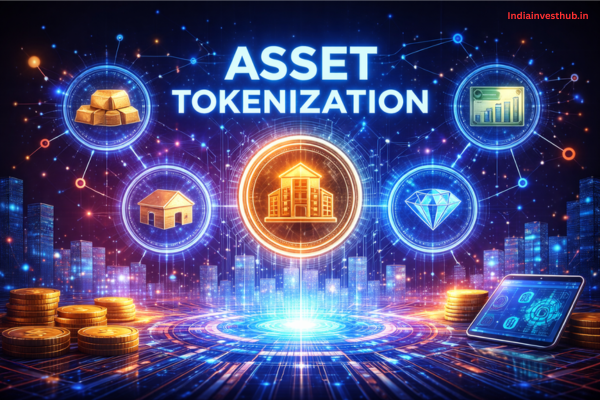
One of blockchain’s most intriguing innovations is asset tokenization — converting rights to real-world assets (real estate, art, bonds, or loans) into digital tokens on a blockchain.
This process can break traditionally illiquid assets into fractional shares, enabling broader investor participation and improving market liquidity. A case in point is mortgage markets moving onto blockchain infrastructure, where loans can be originated, recorded, and traded efficiently — a shift that has reduced processing times dramatically in certain sectors.
Tokenization also streamlines capital raising and secondary market trading, providing opportunities for investors to diversify into previously inaccessible assets.
Fraud Prevention and Cybersecurity: Why Blockchain Improves Financial Safety
Blockchain’s cryptographic foundations and distributed consensus mechanisms offer a new model for preventing fraud. Traditional centralized databases remain vulnerable to hacks and unauthorized changes, while blockchain’s immutable ledger makes tampering evident or impossible without network consensus.
Institutions can use blockchain to improve transparency and track transaction histories, making it easier to detect anomalies that signal fraud or data manipulation.
While blockchain doesn’t fully eliminate cyber risks, its adoption represents a structural strengthening of financial data integrity, appealing to risk-averse institutional investors.
Central Bank Digital Currencies (CBDCs): The Future of Government-Backed Money
Central banks worldwide are exploring or piloting Central Bank Digital Currencies (CBDCs) — digital forms of national currencies built on blockchain principles. Platforms like the mBridge project demonstrate how blockchain can support cross-border, peer-to-peer CBDC payments with compliance features integral to modern financial regulation.
CBDCs aim to enhance financial inclusion, improve monetary policy transmission, and offer governments new tools for economic oversight. For investors, CBDCs represent not just a technological shift but potentially new asset classes and monetary frameworks that could influence interest rates, liquidity, and cross-border capital flows.
Blockchain in Stock Trading and Settlement:
Traditional market clearing and settlement can take multiple days and involve costly intermediaries. Blockchain Technology offers the potential to streamline settlement and clearing, reducing counterparty risk and settlement delays. Research suggests that blockchain architectures can overhaul these foundational market processes, enhancing speed and transparency.
Some exchanges and market infrastructures are already experimenting with blockchain-based fundraising and settlement systems, allowing for tokenized assets and faster reconciliation.
For investors, this evolution promises reduced settlement risk, operational efficiency, and potentially new ways to access capital markets.
Challenges and Risks: What’s Holding Back Blockchain Adoption in Finance?
Despite its promise, blockchain adoption in finance isn’t without impediments:
- Regulatory uncertainty: Governments are still defining how distributed ledger systems fit into existing financial laws.
- Scalability limitations: Public blockchains can struggle with high throughput requirements compared to traditional systems.
- Integration costs: Legacy financial infrastructure remains entrenched, making blockchain integration costly for some institutions.
- Security concerns: While blockchain improves transparency, smart contract bugs and governance risks still pose dangers to investors.
Understanding these risks is essential before allocating capital to this evolving space.
FAQs — Blockchain Technology
Q1: What makes blockchain different from traditional databases?
👉Blockchain is decentralized, immutable, and transparent — unlike centralized databases controlled by single entities.
Q2: Is blockchain only used for cryptocurrencies?
👉No. While cryptocurrencies popularized the technology, blockchain has applications in payments, trade finance, identity, and asset tokenization.
Q3: Can blockchain reduce fraud?
👉Yes. Its immutable, transparent ledger makes unauthorized changes difficult, enhancing fraud detection and prevention.
Q4: Are CBDCs blockchain?
👉Many CBDCs use distributed ledger principles, but implementations vary by country and design.
Q5: Is DeFi safe for investors?
👉DeFi offers high potential returns but carries risks including smart contract bugs, regulatory uncertainty, and liquidity risks.
Q6: How does Blockchain Technology improve transparency in finance?
👉Blockchain Technology records every transaction on a shared, tamper-resistant ledger that all authorized participants can view. This transparency reduces disputes, improves auditing accuracy, and helps prevent fraud across financial systems.
Conclusion:
Blockchain Technology is actively transforming the financial world by enhancing efficiency, transparency, and innovation across record-keeping, payments, contracts, identity verification, tokenization, and market infrastructure — offering investors a new frontier of opportunities. For investors focused on long-term structural shifts, understanding how blockchain reshapes financial systems can provide a strategic advantage. As capital continues flowing into decentralized applications, digital assets, and blockchain-enabled services, the real question isn’t whether blockchain will transform finance — but how deeply will it redefine the rules of financial investing in the years ahead?