
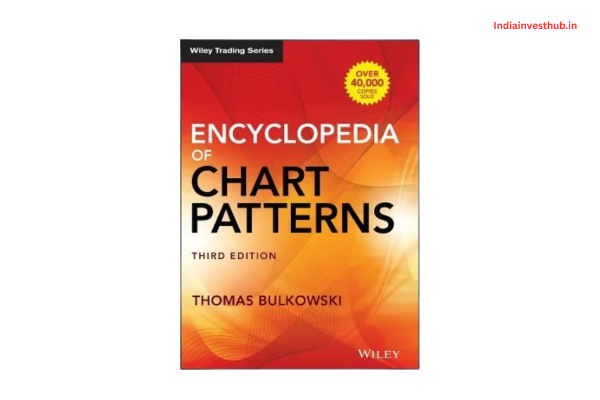
It was a hot summer afternoon in Chennai in 2025, and I found myself poring over chart after chart in a bustling café, watching trades flash on my laptop screen. As the monsoon winds rattled the windows, I recalled the time I first encountered Encyclopedia of Chart Patterns — a book that promised to turn mere candlesticks and trendlines into a language you could speak fluently. That memory felt alive again, because in today’s algorithm-driven markets, pattern recognition still whispers secrets — if you know where to listen.
About the Author — Thomas Bulkowski’s Expertise
Thomas N. Bulkowski is widely respected among technical analysts for his painstaking empirical approach. He started as an engineer and later devoted decades to studying chart patterns. His free website, ThePatternSite.com, remains an active repository of pattern performance updates and commentary by the author.
Across his career, Bulkowski has published multiple books — including Getting Started in Chart Patterns, Chart Patterns: After the Buy, and, of course, Encyclopedia of Chart Patterns. His method is not anecdotal: he collects thousands of chart instances, categorizes them, and computes performance statistics — something most pattern-books do not. That quantitative foundation gives his work a credibility that appeals to data-minded traders.
What’s Inside the Encyclopedia of Chart Patterns:
The third edition (most recent) of Encyclopedia of Chart Patterns offers a suite of well-structured sections for each pattern:
- Tour / Introduction
- Identification Guidelines
- Focus on Failures (i.e. when the pattern doesn’t work)
- Statistics
- Trading Tactics / Tips
- Sample Trade / Experience
In the latest edition, Bulkowski expands to 75 chart patterns, including 23 new ones compared to earlier editions. He also includes event-patterns tied to earnings, downgrades, and corporate action.
The statistical tables include metrics like average rise or decline, failure (breakeven) rates, performance by trend type, volume shape effects, and how the pattern behaves across different decades.
One key innovation is that for each pattern, Bulkowski shows not only how often it succeeds but when it fails, and how traders can trade busted patterns (i.e. patterns that break in one direction but reverse).
🔗 Check Price on Amazon
Price Range in India: ₹6,020 – ₹6,920
Top Chart Patterns You’ll Learn:

While the Encyclopedia of Chart Patterns book covers many, here are a few patterns worth highlighting:
- Head & Shoulders / Inverse Head & Shoulders
Long considered one of the most reliable reversal patterns. Bulkowski gives them favorable statistical support under certain conditions. - Double Top / Double Bottom
Classic reversal patterns. Bulkowski shows how factors like volume and breakout direction affect success rates. - Triangles (Ascending, Descending, Symmetrical)
Patterns of consolidation; Bulkowski analyzes them by breakout direction and time length. - Flags / Pennants / Rectangles
Momentum continuation patterns; their performance is conditioned on prior trend strength and volume. Note: Bulkowski discusses “pipes” (a variant) and rectangle partial declines which can predict breakout direction with ~89 % accuracy (in certain datasets).
Data-Driven Insights: What Makes This Book Unique
What distinguishes Encyclopedia of Chart Patterns is not just that it catalogs patterns, but the deep statistical backbone:
- Bulkowski doesn’t just count successes, he quantifies failure rates (breakeven), so you know how often a pattern breaks even rather than profits.
- He delves into volume shapes (e.g. rising volume, spike volume) and how they influence pattern reliability.
- He separates performance in bull vs bear markets.
- He gives decade-based performance comparisons showing how pattern profitability may shift over time.
- The inclusion of busted patterns is rare: traders learn to spot when a pattern fails and sometimes profit from that reversal.
These features make the book more than a visual reference — it’s a statistical playground for serious traders.
Ease of Understanding and Practical Application:
One potential critique is density. With over 75 patterns and extensive tables, a beginner might feel overwhelmed. However, Bulkowski uses consistent layout and recurring sections (tour, identification, statistics, etc.), so once you internalize the structure, navigating becomes intuitive.
The Sample Trade / Experience sections are especially helpful: by walking through a real-life chart, Bulkowski shows how pattern criteria, entry, exit, and risk management combine. That “in the passenger seat” approach helps bridge theory to practice.
From the perspective of a trader, one challenge is applying some of the nuanced guidelines to noisy, real-world charts. Also, some of his statistical datasets rely on older market regimes — so calibration to 2025 conditions is needed. That’s where contextual adaptation is crucial.
Pros:
- Depth & Rigor — Among the few pattern-books grounded in real data rather than anecdotes.
- Breadth — 75 patterns plus event patterns; more coverage than most technical manuals.
- Failure Awareness — Helps readers see both sides: success and what goes wrong.
- Sample Trades — Real examples help cement the learning.
- Longevity — Because it’s built on statistical methodology, it tends to age better than pure opinionated trading books.
Cons:
- Density / Complexity — Not light reading; casual traders might struggle with the sheer volume.
- Not Beginner-friendly — If you’ve never seen chart patterns, you may need supplementary introductory resources.
- Data vs Current Markets — Some historical performance metrics may not fully extrapolate to 2025’s evolving market microstructure.
- Too Many Patterns to Master — You may end up focusing on a subset — which is fine, but the full scope can be daunting.
Real Reader Experiences:
👉“If you want to become a master in trading, go for this book. But first, learn the basics before buying it.”
👉“High-quality and informative, this is the original English resource for anyone who wants to learn how to read chart patterns.”
👉”Well-written, with examples and easy to navigate to relevant sections. A good companion to the author’s website, and well worth the money.”
Top 10 Technical Analysis Books Every Trader and Investor Should Read
Who Should Read This Book in 2025:
- Traders who already know basic patterns and want statistical depth.
- Swing traders and technical analysts looking to refine which patterns to prioritize.
- Quantitative traders — to incorporate pattern-based filters or signals into systematic models.
- Investors who want to understand price action more visually (but with empirical backing).
- Anyone skeptical of pattern books that rely only on pictures and anecdotes — this is among the few that provides systematic back-testing and failure analysis.
If you are an absolute beginner, it’s better to pair this with a more introductory technical analysis book first, then graduate to this.
FAQs – Encyclopedia of Chart Patterns
Q1: Is Encyclopedia of Chart Patterns still relevant in 2025?
👉Yes, especially because of its data-driven foundation. While markets evolve, the statistical mindset helps adapt patterns. The addition of modern event patterns also adds contemporary relevance.
Q2: How many patterns are covered?
👉The latest edition covers 75 chart patterns, including ~23 new ones compared to earlier versions.
Q3: Does the book provide performance metrics?
👉Yes — for each pattern you’ll find success/failure rates, average moves, volume effects, broken (busted) pattern performance, and decade-by-decade analysis.
Q4: Can a beginner understand this book?
👉It’s not impossible, but beginners may struggle with depth. It’s recommended to supplement with simpler technical analysis guides.
Q5: Is it better suited for Indian markets or global markets?
👉Bulkowski’s data is global/historical. Readers in India should test his patterns against local market behavior (e.g. NSE, BSE).
Conclusion:
Encyclopedia of Chart Patterns continues to be a heavyweight in technical analysis literature even in 2025. Its combination of empirical rigor, pattern breadth, and practical examples gives traders and analysts a powerful toolbox — not just to recognize formations, but to judge their reliability. While the sheer volume and statistical depth can be overwhelming, especially for newcomers, the book rewards persistence and calibration.
If you want to know Encyclopedia of Chart Patterns deeply — from theory to chart-level application — will you join us in turning charts into insight?


