Home Loan “In the heart of a bustling Chennai suburb, Ramesh and Priya stood outside the barely-finished apartment they’d long dreamed of. They had saved diligently, handled the legal formalities, but when it came to financing the rest of the cost, everything changed. They discovered that while the idea of buying a home seemed clear, choosing the best home loan in India in 2025 became a maze – with fluctuating interest rates, changing eligibility rules, and hidden costs lurking around the corner. Their story is far from unique.
According to industry data, new home-loan growth in India slowed to around 9.6 % in the year to June 2025, down sharply from a 36.3 % growth a year earlier. Many lenders now offer interest rates starting as low as 7.35% p.a. for eligible borrowers.
If you’re looking to explore the Best Home Loan Options in India 2025: Interest Rates, Eligibility & Hidden Costs, this article is tailored just for you. We’ll guide you through every aspect—from trends and rates to eligibility criteria, hidden charges, and strategic tips—so you can confidently choose the right home loan for your needs and avoid surprises.
Overview of Home Loan Trends in India for 2025:

Home loans in India are evolving rapidly. Growth in new home-loans has significantly slowed to 9.6 % year-on-year as of June 2025. Meanwhile, interest rates are broadly starting from 7.35 % p.a. for the most competitive borrowers. What’s driving this shift?
- The Reserve Bank of India (RBI) has kept its repo rate steady, and banks are being cautious with spreads and margins.
- Public-sector banks are offering the lowest starting rates (7.35 % p.a.) while private banks and housing finance companies (HFCs) have wider spreads.
- The market is shifting from rapid growth to profitability and risk-control, meaning you’ll see more rigorous eligibility checks and clearer scrutiny of borrowers.
What this means for you: It’s a borrower’s market in terms of starting rates, if you meet eligibility criteria. But the flip side is that banks are stricter, and hidden costs are becoming more prominent. That’s why choosing the right home loan in 2025 needs more than just comparing headline interest rates.
Best Banks & NBFCs Offering Home Loans in 2025:
When you’re looking for the best home loan options, it’s essential to compare the lender options carefully:
- Public‐sector banks like Bank of India, Central Bank of India and Union Bank of India are offering starting rates around 7.35 %–7.45 % for top profile borrowers.
- Private banks such as HDFC Bank, Kotak Mahindra Bank and ICICI Bank also have strong housing-loan offerings but often with slightly higher spreads or more stringent eligibility. For example, ICICI Bank lists home loan rates in specific slabs starting at 8.75 % p.a. for salaried borrowers.
- Non-bank finance companies (NBFCs) like Bajaj Finserv also come into play, offering starting rates around 7.45 % p.a. and relatively less paperwork for certain borrowers.
Why this matters:
Selecting the right lender can save you tens of thousands of rupees over the loan tenure. What you should focus on:
- The starting rate vs effective rate you qualify for
- The additional fees (processing, legal, valuation, etc.)
- Speed of approval and flexibility (especially for self-employed or NRI borrowers)
- Transparent disclosure of hidden costs
Home Loan Interest Rates in 2025: Bank-Wise Comparison
Here is a snapshot of what home loan interest rates look like in 2025 for leading lenders:
- Public sector essence: Rates start at 7.35 % p.a. for top borrowers.
- Bank of Baroda: 7.45 % p.a. onwards.
- HDFC Bank: Starting from 7.90 % p.a. for select cases.
- ICICI Bank: Starting from about 8.75 % p.a. for salaried borrowers.
- Processing fees often range from 0.35% to 3% of the loan amount, depending on lender and applicant profile.
What to watch out for:
- A low “from” rate doesn’t guarantee you will get it—your profile (credit score, income stability, loan amount, property type) matters
- The total interest paid over 15-20 years can vary greatly even with a difference of 0.5% in rate
- Some lenders offer special rate cuts for women or younger borrowers—worth asking for
Eligibility Criteria for Home Loans in India:
Most lenders follow these common eligibility criteria, but 2025 brings sharper scrutiny:
- Age: Typically 21 to 70 years at loan maturity
- Income/Employment:
- For salaried: Minimum stable job tenure of 1-2 years
- For self-employed/professionals: Minimum 2-3 years of business/profitability
- Credit score: Ideally 750+ to qualify for the lowest rate slabs
- Loan‐to‐Value (LTV) ratio: Up to 90% of property cost for loans up to ₹30 lakh; beyond that 80% or lower
- Property type: Ready-to-move or certain under-construction projects approved by relevant authority
- Other factors: Existing debt obligations, property legal & technical clearance
Because lenders are tightening risk parameters, even a small hiccup in documentation or income proof may bump you into a higher rate slab.
Can a Low Credit Score Stop You from Getting a Home Loan in India?
Home Loan Documents Required in 2025:
Expect the documentation process to be thorough. Typical documents:
- Identity proof (Aadhaar, PAN, passport)
- Address proof (utility bills, Aadhaar, passport)
- Income proof:
- Salaried: Salary slips (last 3-6 months), Form 16/IT returns
- Self-employed: Business registration, audited accounts/IT returns for last 2-3 years
- Bank statements (last 6-12 months)
- Property documents: Sale agreement, title deed, building plan approval, occupancy certificate (if applicable)
- Valuation report of the property
- GST/compliance documents for new building projects
Ensuring all paperwork is clean and verified upfront will accelerate approval and reduce surprises.
Hidden Costs Banks Don’t Tell You About:
Often, when borrowers compare “interest rate = lowest rate”, they overlook these hidden costs:
- Processing fee: Ranges from 0.25% to 3% of loan amount. For example, some lenders charge up to 3% for certain profiles.
- Legal/Valuation fee: Lenders send valuers/legal advisors for property verification — cost borne by borrower
- Pre-payment/part-payment charges: If you pay off early or transfer balance, there may be significant fees
- Insurance and charges: Some banks require home-loan insurance or force property insurance at an additional cost
- Floating rate reset costs: If your loan is on floating rate you may not notice small rate increases that cumulatively add up
- Hidden cost of ‘starting rate’ vs effective rate: A bank might advertise “7.35% p.a.” but the rate you qualify for could be 8% or more
Being aware of all these ensures you truly compare total cost, not just the headline rate.
Best Home Loan Options for Salaried, Self-Employed & NRI Borrowers:
Different borrower categories have different strengths and challenges in 2025:
- Salaried borrowers: Best placed to get lowest rates due to stable income and easier documentation. Aim for 7.35-7.9% p.a.
- Self-employed / business owners: Might face higher scrutiny; often need to show 2-3 years of income proof. Rates may start slightly higher.
- NRIs: Some banks offer home loans for NRIs; currency risk, repatriation rules, higher documentation may apply. Balance transfer benefits may be lesser.
When evaluating your category, match lenders that specialize in your borrower type—they often have tailored products.
Government-Backed Home Loan Schemes for 2025:
If you’re buying your first home or fall under certain categories, government schemes can help:
- Schemes like Pradhan Mantri Awas Yojana (PMAY) can make you eligible for interest subsidies—reducing effective interest cost.
- Some states offer additional subsidies or tax benefits for affordable housing under ₹35 lakh values.
- These schemes can shift the lender’s interest rate by 0.25-0.75% downward if you qualify—worth checking.
How to Get the Lowest Home Loan Interest Rate in 2025:
Here are actionable steps:
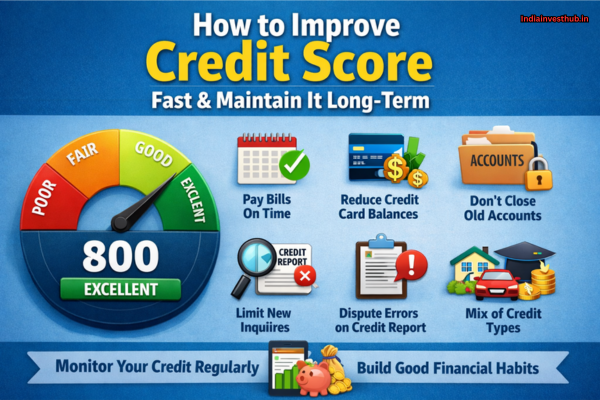
- Boost your credit score well above 750 by clearing existing debts and ensuring on-time payments
- Opt for shorter tenure if your budget allows — lenders often give better slabs for lower tenure
- Borrow a property with clear legal & technical title — no disputes, approvals in place
- Ask for waiver of processing fees or negotiate extra features
- Consider a bank with relationship banking if you hold multiple products with them — they may offer loyalty benefits
- Use balance transfer if you find a lower rate later in your tenure and ensure hidden costs of transfer are accounted
Home Loan EMI Calculator & Affordability Planning:
Understanding the monthly cost is key: For instance, a ₹40 lakh loan at 7.5% p.a. for 20 years yields an EMI of approximately ₹31,600.
Use online EMI calculators provided by banks or financial websites to run scenarios with fixed, floating, and different tenures.
Also assess your income-to-EMI ratio. Many lenders prefer EMI plus other debt payments to be less than 50-60 % of your net income.
Increase Your EMI or Make Extra Payments? Find the Best Way to Pay Off Your Home Loan Faster
Should You Choose Fixed, Floating or Hybrid Rates in 2025?
- Fixed rate: EMI stays constant. Good if you expect rates to rise.
- Floating rate: EMI may change as benchmark rates change. Good if you expect rates to fall or want lower initial rate.
- Hybrid: Fixed for initial few years, then floats. Offers a middle path.
In 2025’s environment, with rates near historic lows but risk of reversal, many borrowers are opting for hybrid or floating products — provided they are comfortable with potential increase.
Hidden Risks & Mistakes First-Time Borrowers Make:
- Accepting lowest “starting” rate without checking your eligible slab
- Ignoring processing/legal/valuation fees which add up
- Not factoring in future interest-rate rise (in floating rate loans)
- Overstretching EMI vs income — leading to risk of default
- Assuming balance transfer is always beneficial — hidden costs may negate benefits
Best Home Loan Balance Transfer Options in 2025:
If your current home loan rate is high (e.g., 9–10%) you might benefit from a balance transfer to a lender offering 7.35-8% p.a.
Key check-points:
- Transfer charges levied by both current and new bank
- Revaluation, legal formalities cost
- Tenure remaining: shorter the remaining tenure, better the benefit
- Pre-payment or foreclosure penalties in existing loan
Top Banks With the Fastest Home Loan Approvals in 2025:
While speed of approval varies branch-to-branch, some lenders stand out for digital processing, minimal documentation, and quick disbursal (especially for salaried borrowers). Look for banks advertising “2-day sanction” or “online processing with minimal paperwork” in their home-loan product details. Choosing such lenders can save time and reduce stress in a competitive real-estate season.
Agriculture Loan Approval: What Banks Really Look for in Applicants
FAQs – Best Home Loan Options in India
Q1: What is the lowest home loan interest rate I can get in 2025?
👉Some public-sector banks are offering rates starting from about 7.35% p.a. for top‐profile borrowers.
Q2: Does the “starting rate” mean I will get that rate?
👉Not necessarily. Starting rates apply to best-in-class borrowers. Your actual rate depends on credit score, income, property profile, etc.
Q3: What are hidden costs I must check?
👉Processing fees, legal/valuation charges, insurance requirements, pre‐payment/part‐payment fees — all add to effective cost.
Q4: Is fixed or floating better now?
👉It depends. If you expect rates to rise, go for fixed or hybrid. If you expect rates to stay flat or fall and want initial lower cost, floating may work.
Q5: Can NRIs also avail good home loan options?
👉Yes. Many banks/NBFCs offer home loans to NRIs, but documentation, currency risk, and repatriation rules require extra care.
Conclusion:
So, Which Home Loan Is Best for You in 2025?
- Choose a lender offering the lowest effective interest rate you qualify for, not just the advertised “from” rate.
- Confirm your eligibility and documentation readiness – especially if you are self-employed or NRI.
- Factor in all hidden costs (processing, valuation, legal, insurance) to find the true cost of borrowing.
- Decide your rate type (fixed/floating/hybrid) based on your risk comfort and future interest-rate scenario.
- Use an EMI calculator to ensure your monthly payment fits comfortably within your income.
Are you ready to compare offers, lock in the best home loan, and turn your dream home into reality?