Agriculture loan approval doesn’t happen by chance — it’s the result of a bank carefully checking several boxes before saying “yes”. Imagine you’re standing at the entrance of the banking hall, your farming hat in hand, looking eager — the bank officer glances up, smiles politely, asks: “So, tell me about your farm, your income, your risk…” That conversation is exactly the beginning of what happens behind the scenes. According to the Reserve Bank of India (RBI) Working Group report, only about 41% of small and marginal farmers (who operate more than 80% of landholdings) have access to institutional credit from banks.
Meanwhile, recent data shows that as of January 2024, the total credit disbursed to the agriculture sector stood at ₹22.84 lakh crore, with crop loans of about ₹13.67 lakh crore and term loans of ₹9.17 lakh crore. So if you’re a loan applicant wanting to know “Agriculture Loan Approval: What Banks Really Look for in Applicants”, you’re in the right place.
Let’s walk through the key components that banks scrutinize — using storytelling, stats, and plain language — so you can boost your chances of getting approved.
Understanding Agricultural Loans: Types and Purpose
Think of agricultural loans as tools in your toolbox. Some are hammers (short-term crop loans) meant for sowing seeds, buying fertiliser, harvesting. Some are screwdrivers (term loans) used for bigger things: irrigation systems, tractors, changing the layout of your farm. A bank wants to know: what tool do you need? And will that tool actually help you build something useful?
Banks categorize these loans: production or crop loans (short term), investment or term loans (medium/long term). The shift towards short-term has grown: from 51% of agricultural credit in 2000 to 75% in 2018 going into short-term crop loans. As an applicant, you must match your request to a clear purpose, show how you’ll use the funds, and convincingly explain how that purpose will produce results.
Eligibility Criteria for Agriculture Loans:
Before a bank even starts deeper checks, they’ll ask: do you qualify? Are you eligible? That means things like: being an Indian citizen (in most cases) with a record of farming or allied activities (horticulture, livestock, etc.), holding or leasing land (or being eligible in a scheme for landless farmers). The bank will check age, farming experience, location of the land, legal status of tenancy or ownership.
Picture Ram, a small farmer in Tamil Nadu. He has been cultivating 2 acres for five years and wants a loan for drip irrigation. He fills in his Aadhaar, land records, tenancy agreement, previous crop yield. He meets the basic eligibility and thus clears the first hurdle.
Essential Documents Required for Agriculture Loan Approval:
Now the paperwork. This is where many applicants stumble. Banks want documentation that supports everything you claimed — identity, address, land record, crop history, bank statement, income proof, tenancy or ownership proof. They also may ask for project reports if your loan is for large investment. The modus operandi: the clearer and more honest your documents, the smoother the process.
Back to Ram: He files his Aadhaar, PAN, election card (for address), land deed showing his 2 acres, previous two years bank statements showing farm income, tenancy agreement (since he leases part of land), and quotes the cost of pipes and pumps he wants to buy. The bank officer nods, “This looks complete — now let’s look at creditworthiness.”
How Banks Assess Creditworthiness of Farmers:
Creditworthiness is the bank’s way of asking: will you repay? The bank will look at your past borrowing (if any), your repayment history, your income stability, your farming productivity, your working capital needs and risks (weather, market price). The fact that only 41% of small/marginal farmers are covered suggests banks are cautious about risk. They may also visit your farm, check your operations, validate details. According to RBI FAQs on priority sector lending, banks must ensure they maintain records of field visits for agricultural loans.
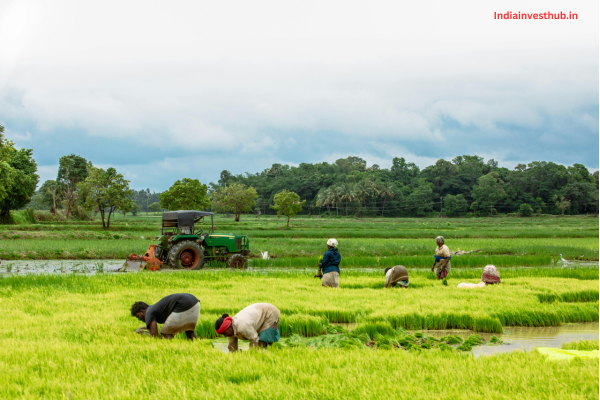
Imagine the bank officer goes to Ram’s farm: sees the crop field, drip irrigation layout, checks if the plan matches what he claimed. This physical validation increases the bank’s confidence and helps you get approved.
Importance of Collateral and Security in Agriculture Loans:
Collateral is security for the bank — something they can fall back on if repayment fails. Many agricultural loans still ask for land or asset security, though for loans up to a certain amount, collateral may be waived under certain priority sector rules. If you own land, equipment, or other assets, you’re in a stronger position. If you don’t, you need to compensate with stronger income proof or alternative security.
In Ram’s case, he owns 2 acres and has some farm equipment. He pledges this as security. Bank feels comfortable lending because if drought hits, they still have some fallback.
Role of Agricultural Income and Farm Productivity in Loan Evaluation:
Banks will ask: what’s your income from farming? Are you productive? Do you have sustainable income flows? Because farming has variability (monsoon risk, market risk), banks like to see consistent crop yields, multiple cropping where possible, good use of technology. Your productivity shows you’re less likely to default.
Statistically, India’s agricultural infrastructure investment has been low (less than 2% CAGR in recent years) despite the large workforce in agriculture. That means banks are extra cautious: they want to lend to those making strides in productivity.
Ram shows his last three years yields improved by adopting drip irrigation. He provides data: last season yield increased by 20%. This gives the bank confidence.
Government Schemes and Subsidies That Support Loan Approval:
Governments often provide interest subvention, subsidies, credit guarantee schemes etc., which reduce the bank’s risk and hence increase your chances of approval. For example, there is an interest subvention scheme under which short-term crop loans up to ₹3 lakh get a subsidy, making effective rate lower. The Central Sector Scheme of financing facility under the Agriculture Infrastructure Fund (AIF) offers interest subvention of 3% for loans up to ₹2 crore under certain projects. If you apply under a scheme that the bank knows is backed by government support, banks view you more favourably.
So you tell the bank: “I’ll apply under the X scheme with 3% subsidy, and here’s the scheme document.” The bank smiles — better chances.
Common Reasons for Agriculture Loan Rejection:
Now, let’s acknowledge the sting: not all get approved. Some common reasons banks reject agriculture loans include: incomplete documents, shaky land records, doubtful repayment capacity, lack of collateral/security, low productivity or income, high risk due to location (weather, soil), no clarity on how loan will be used, or poor credit history. Some banks also hesitate if they cannot verify your land or farming activity. In fact, only 41% of small/marginal farmers are covered means many simply don’t meet rigorous criteria. If you’re a loan applicant, you must proactively remove these red-flags before you apply.
The Art of Financial Balance: Differentiating Between Needs and Wants
Tips to Improve Your Chances of Agriculture Loan Approval:
Here are practical steps you can take:
- Prepare your documents early: identity, address, land or lease papers, bank statements, past yield records, income proof.
- Show strong farm productivity: quantify your yields, show improvements, use technology if possible.
- Choose your loan amount and purpose carefully: be realistic and aligned with your farm size and income.
- Opt for a bank or scheme with subsidies: if you can apply under government-supported scheme, do so.
- Strengthen collateral or security: if you have land, equipment, other assets — present them. If you don’t, show strong income or alternative security.
- Work with a bank you know well: existing relationship with the bank can help ease trust.
- Visit the branch and explain your plan: make sure the branch manager or agriculture desk understands your plan.
- Get your land records and tenancy status cleared: shaky land or lease documents can kill your chances.
- Have a repayment plan: show how you will repay (from crop sales, allied activities, diversification).
- Follow through with the scheme guidelines: if you’re applying under a special scheme, satisfy every condition.
If Ram follows all the above, walks into the bank with full documentation, explains his plan well, mentions the scheme, shows his productivity data — he’s giving himself a strong shot at approval.
FAQs – What Banks Really Look for in Applicants
Q1: Is collateral always needed for an agriculture loan?
👉Not always. For smaller loans under certain schemes, collateral might be waived. For example, for loans up to a certain limit banks may waive margin/security when classifying under priority sector. But for larger term loans, banks usually expect security.
Q2: Can tenant farmers apply for agriculture loans?
👉Yes — provided they have a valid lease/tenancy agreement or other recognised arrangements, and the bank is satisfied with the production plan and income. Eligibility criteria allow for tenant/share-croppers under certain norms.
Q3: Does the bank care about past crop yield or farm productivity?
👉Definitely yes. Banks see production and income as indicators of your ability to repay. Better yield, diversified crops, use of technology — all things the bank likes.
Q4: What happens if I don’t have a previous loan history or credit score?
👉It may make things tougher but not impossible. You’ll need to show strong documentation, buttress your case with other strengths (income, land, purpose), and maybe pick a bank willing to take your case.
Q5: Are government subsidies helpful in getting approval?
👉Yes — if you apply under a scheme that offers interest subvention or credit guarantee, that reduces bank’s risk and improves your chances.
Conclusion:
If you’re a loan applicant wanting to know “Agriculture Loan Approval: What Banks Really Look for in Applicants”, remember: it boils down to three big themes — your purpose, your capacity to repay, and your security/credibility. Make your purpose clear (what you’re using the loan for), show you have the capacity (farm productivity, income, bank statements), and offer enough security or documentation to convince the bank you’re a safe bet.
With India’s agricultural credit flow rising and more focus on reaching small farmers (the total agricultural credit in Jan 2024 was ₹22.84 lakh crore). there’s opportunity — but also competition and caution from banks. Take your time to prepare, pick the right bank, and enter the process with confidence.
Are you ready to take the next step and gear up your application for approval?