
Best Technology Stocks in India continue to attract serious investor attention as the country strengthens its position as a global technology and digital services hub. From large IT service providers driving international digital transformation to emerging software and AI-focused companies building scalable solutions, India’s tech sector offers a wide range of investment opportunities. For investors looking beyond short-term market noise, understanding how this sector is evolving, where growth is coming from, and which business models are most resilient has become more important than ever.
This introduction sets the foundation for a clear, data-backed analysis of India’s technology landscape, helping investors evaluate sector trends, growth drivers, risks, and long-term potential before making informed investment decisions.
Overview of India’s Technology Sector: Market Size, Trends & Growth Drivers:
India’s technology sector plays a pivotal role in the economy and is projected to grow further as digital infrastructure, enterprise cloud adoption, SaaS services, data analytics, and AI become core to business operations globally. According to industry data, the Indian IT services market — a key pillar of technology stocks — is expected to grow at a CAGR of around 9.06% from 2025 to 2030, reaching USD 57.13 billion by 2030 from USD 37.03 billion in 2025.
Domestic spending and exports both contribute to this trend, with Indian IT companies serving major global clients across sectors — from finance and retail to manufacturing and healthcare. Continued advancements in automation, AI-driven solutions, and digital transformation services remain central drivers of growth and investor interest.
Top IT Services Companies in India: Leaders Driving Global Digital Transformation
When you talk about Best Technology Stocks in India, stocks like Tata Consultancy Services (TCS), Infosys, HCL Technologies, Wipro, and LTIMindtree often top the list in terms of market capitalisation, revenue, and global presence.
- TCS — consistently one of India’s largest IT services providers with diversified offerings in cloud, consulting, and enterprise solutions.
- Infosys — strong in digital transformation, automation, and cloud services with global clientele.
- HCL Technologies and Wipro — major performers with a mix of digital and infrastructure management services.
- LTIMindtree — known for deep digital engineering and AI-driven services.
These firms together anchor the Indian IT sector and serve as blue-chip holdings for investors seeking stable exposure to technology.
Mid-Cap & Emerging Technology Stocks With High Growth Potential:
Beyond the well-known large caps, several mid-cap and emerging technology stocks in India offer compelling growth narratives. Stocks like Coforge, Mphasis, Oracle Financial Services Software, and Persistent Systems stand out for their specialised services in niche tech domains, faster growth rates, and strategic positioning in areas like cloud migration, digital platforms, and analytics.
Mid-cap tech stocks often deliver higher growth potential due to agile business models and specialised service portfolios, though they come with higher volatility. For investors willing to embrace growth with risk awareness, these picks can enhance portfolio diversification beyond traditional large-cap names.
AI, Cloud & Data Analytics: Technology Sub-Sectors Powering India’s Future

The future of Best Technology Stocks in India is powered by next-generation tech segments: AI, cloud computing, and data analytics. Companies across the board are integrating AI into service offerings, with industry reports showing that AI-driven deals and workload automation are rapidly becoming central to IT service contracts.
Cloud initiatives, cybersecurity, and analytics platforms are accelerating demand for digital services both domestically and internationally. This makes technology stocks not just beneficiaries of outsourcing trends but strategic enablers of global digital transformation.
SaaS and Software Product Companies in India: Long-Term Growth Story
While services giants dominate, Indian SaaS and software product companies are gaining investor attention for their recurring revenue models and scalable growth. These firms often show strong gross margins and global customer bases, making them attractive for long-term investors interested in recurring tech revenues rather than the project-based income typical of services firms.
Emerging SaaS companies are leveraging India’s talent pool to build competitive products in verticals like fintech, enterprise security, and supply-chain analytics, delivering innovation that can sustain long-term portfolio growth.
Impact of Global Tech Spending and US Economy on Indian IT Stocks:
The performance of Indian technology stocks is closely tied to global IT spending trends — especially in the United States and Europe, which account for a significant portion of revenues for Indian services firms. Macroeconomic conditions, discretionary technology budgets, and client spending appetite directly influence these stocks’ revenue growth and earnings outlook.
Soft demand in key markets can temper growth expectations in the short term, but long-term secular trends remain supportive of cloud, AI, and digital transformation expenditures.
Revenue Models Explained: IT Services vs Product-Based Tech Companies
One important distinction for investors is between services-oriented IT firms and product-based tech companies. Services firms like TCS or Infosys derive revenue from consulting, outsourcing, and implementation contracts, which often provide steady cash flow but can be cyclical with macro trends. SaaS and product companies, on the other hand, benefit from subscription models, predictable recurring revenue and often higher gross margins, albeit with greater emphasis on customer acquisition and retention.
Understanding these models helps investors assess growth prospects and valuation multiples effectively.
Valuation Metrics for Technology Stocks: P/E, Growth Rate & Margins
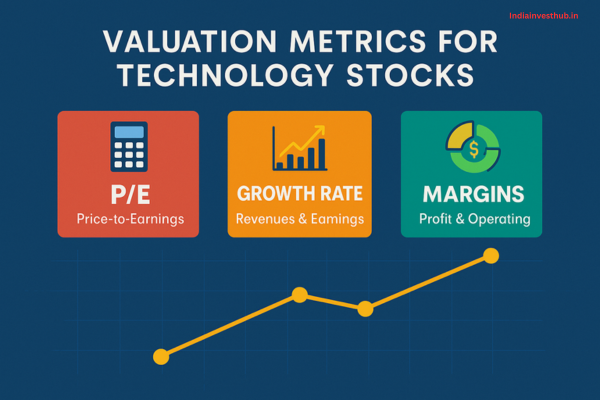
Key valuation metrics like Price/Earnings (P/E) ratio, revenue growth, and operating margins are essential tools for analyzing tech stocks. High-growth SaaS players might trade at premium P/E ratios due to expected future profits, while established IT services firms might have more moderate valuations reflecting stable earnings. Investors often balance growth prospects against current valuations to identify attractive entry points.
Risks in Technology Stocks: Currency Fluctuations, Demand Slowdown & Competition
Like any sector, Best Technology Stocks in India come with risks. Exchange rate fluctuations (especially USD/INR) can impact earnings for companies earning a substantial share of revenue offshore. Cyclical demand in global markets, competition from global and regional players, and technological disruption through automation or commoditisation of services also pose risks that investors must consider.
Technology Sector Outlook 2026 and Beyond: Investment Strategy for Long-Term Investors
Looking toward 2026 and beyond, the technology sector offers a blend of growth catalysts and cautionary signals. While short-term demand uncertainty might affect earnings momentum, structural trends toward digital transformation, data-driven strategies, and cloud adoption support sustained long-term growth. A diversified investment strategy spanning large-cap stability and mid-cap or growth-oriented tech stocks can help investors capture broad sector performance over time.
FAQs — Best Technology Stocks in India
Q1: What qualifies as a technology stock in India?
👉Technology stocks include companies involved in IT services, software development, digital transformation, SaaS products, cloud services, and related tech domains.
Q2: Are technology stocks in India good for long-term investing?
👉Yes, fundamentally strong tech stocks with robust digital service demand and scalable software models are considered good long-term investment opportunities.
Q3: How do global tech trends impact Indian tech stocks?
👉Global IT spending trends, especially in key markets like the US, directly affect revenue growth for Indian IT services companies and influence investor sentiment.
Q4: Should investors focus on large caps or mid caps?
👉Large caps generally offer stability and dividends, while mid caps may deliver higher growth but with greater volatility. Diversification across both can optimise risk-adjusted returns.
Conclusion:
Best Technology Stocks in India represent a powerful long-term investment theme backed by strong digital adoption, global IT demand, and continuous innovation across AI, cloud, data analytics, and software products. While short-term challenges such as global economic slowdowns, currency fluctuations, and competitive pressures can impact stock performance, the structural growth drivers of the Indian technology sector remain firmly intact.
For investors who take a disciplined, long-term approach—balancing stable large-cap IT leaders with selective high-growth mid-cap and product-based companies—the sector offers meaningful wealth creation potential. The key lies in understanding business models, valuations, and risk factors rather than chasing momentum, making one important question worth asking before investing.
are you building a tech-focused portfolio for quick gains or sustainable long-term growth?


