Polkadot (DOT) is a next-generation blockchain project built to solve one of the biggest problems in crypto today—different blockchains don’t easily communicate with each other. While many popular networks work like separate islands, Polkadot is designed to connect them and help them share data, transfer value, and work together smoothly. This is why Polkadot is often called a multi-chain network made for the future of Web3.
Launched with the goal of improving speed, scalability, and security, Polkadot allows multiple blockchains (called parachains) to run side-by-side while being connected through its main network called the Relay Chain. The DOT token plays an important role in the ecosystem by supporting staking, governance, and network operations. In this article, you’ll clearly understand what Polkadot (DOT) means, how it works, its real-world uses, key benefits, and what the future outlook could look like for DOT in the coming years.
Table of Contents
What Is Polkadot (DOT)?
Polkadot is a decentralized blockchain platform designed for interoperability, meaning it helps different blockchains exchange data and assets. Polkadot’s native coin is DOT, used for staking, governance, and bonding (locking tokens to access resources in the network).
Instead of forcing every project to build on one chain, Polkadot lets projects build their own specialized chains — and still connect to the broader ecosystem. That’s a big deal for Web3 and for investors looking for long-term infrastructure projects.
Who Created Polkadot and Why It Was Built?

Polkadot was created by Gavin Wood, one of the co-founders of Ethereum, along with other contributors like Robert Habermeier and Peter Czaban.
The motivation was clear: Ethereum helped bring smart contracts to life, but it also exposed the limits of single-chain scaling and congestion. Polkadot was built to support a future where many blockchains exist — and they need to communicate without relying on centralized bridges.
How Does Polkadot Work? Relay Chain, Parachains & Bridges Explained
Polkadot’s architecture is what makes it unique.
Relay Chain (the core):
The Relay Chain is the heart of Polkadot. It provides:
- Consensus
- Shared security
- Network coordination
Parachains (custom blockchains):
Parachains are independent chains connected to the Relay Chain. They run in parallel, which improves scalability and allows different projects to build chains customized for their needs.
Bridges (connection to other networks):
Bridges allow Polkadot to connect to networks like Bitcoin and Ethereum, improving interoperability.
For investors, this structure matters because it means Polkadot isn’t just one product — it’s an ecosystem design aimed at long-term scaling.
What Is DOT Token Used For? Staking, Governance, and Fees
DOT isn’t just a “trading coin.” It has real functions in the network:
- Staking: DOT helps secure the network using nominated proof-of-stake (NPoS), where holders nominate validators they trust.
- Governance: DOT holders can vote on network upgrades and proposals.
- Bonding / resource allocation: DOT is used when parachains secure access to Polkadot blockspace (through mechanisms like auctions/coretime).
This utility gives DOT demand beyond just speculation.
Polkadot vs Ethereum vs Cosmos: Key Differences You Should Know
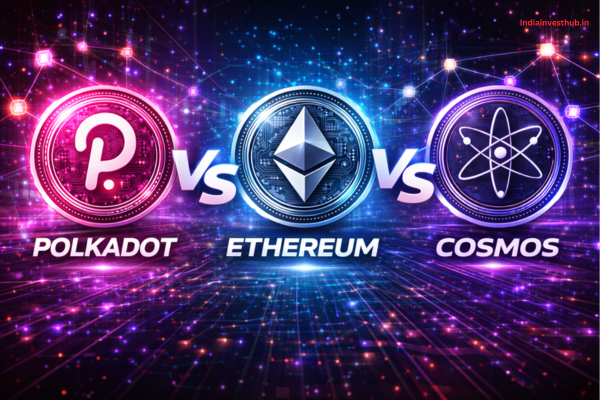
Investors often compare Polkadot with Ethereum and Cosmos since all aim to support Web3.
Polkadot:
- Shared security through Relay Chain
- Parachains connect under one umbrella
- Strong interoperability design
Ethereum:
- Largest smart contract ecosystem
- Growing scaling via Layer-2 networks
- Strong institutional interest
Cosmos:
- “Internet of blockchains” vision
- App-specific chains with IBC connections
- More independent security per chain
If you’re investing, the key difference is that Polkadot’s shared security model can lower the burden for smaller chains to launch securely.
Top Real-World Uses of Polkadot (DOT) and Web3 Applications:
Polkadot’s goal is not just to “exist” — it’s to power real Web3 development, including:
- DeFi projects across parachains
- Cross-chain messaging and services
- Enterprise-ready blockchain frameworks using Substrate
One important supporting tool is Substrate, which helps developers build blockchains faster instead of starting from zero.
Benefits of Polkadot: Scalability, Interoperability, and Security
Polkadot attracts long-term investors mainly because of three major strengths:
Scalability:
Parachains process transactions in parallel, reducing congestion and improving throughput.
Interoperability:
Polkadot’s design supports data and asset transfers between chains without centralized middlemen.
Shared Security:
New parachains benefit from Polkadot’s security instead of bootstrapping their own validator set.
For investors, these are “infrastructure-level advantages,” meaning the upside can grow as adoption grows.
What Are Parachain Auctions?
Polkadot uses parachain slot auctions (historically) to allocate limited parachain access.
Projects can:
- Bid using their own DOT
- Use crowdloans, where the community contributes DOT to help secure a slot
Crowdloans were popular because they allowed investors to support new parachains and often earn rewards in return, while their DOT stayed locked for a period.
This is one of the most unique token-demand drivers in Polkadot’s model.
Is Polkadot a Good Investment? Risks, Volatility, and Market Potential
Polkadot can be a strong long-term bet for some investors — but it’s not risk-free.
Pros:
- Strong tech and design
- Real interoperability vision
- Staking + governance utility
- Built by experienced founders
Risks:
- Adoption must grow to drive stronger DOT demand
- DeFi activity is smaller than top chains
- Market cycles can be brutal
- TVL and usage have fluctuated over time
So if you’re investing in DOT, you’re betting on ecosystem growth and cross-chain demand — not just short-term pumps.
Polkadot Future Outlook (2025–2030): Price Potential and Growth Factors

Polkadot’s future will depend on:
- Parachain adoption (real apps + real users)
- Developer growth using Substrate
- Improved usability and liquidity
- Broader Web3 adoption
Binance Square notes that increased usage, developer activity, and TVL can build demand for DOT through staking, governance, and bonding functions.
Also, ongoing redesign ideas like JAM (Join-Accumulate Machine) show Polkadot continues improving its base architecture rather than staying stagnant.
FAQs — Polkadot (DOT)
Q1: What is Polkadot (DOT) in simple words?
👉Polkadot is a blockchain network that connects multiple blockchains, and DOT is its coin used for staking, governance, and network functions.
Q2: What is the Relay Chain in Polkadot?
👉The Relay Chain is Polkadot’s main chain that provides shared security and coordination for connected parachains.
Q3: What are parachains in Polkadot?
👉Parachains are independent blockchains connected to Polkadot that run in parallel and benefit from shared security.
Q4: What is DOT used for?
👉DOT is used for staking, governance voting, and bonding resources to support the network.
Q5: Are parachain auctions still important?
👉They have been a key part of Polkadot’s growth, allowing projects to secure slots using DOT, often with community crowdloans.
Conclusion:
Polkadot is one of the most ambitious long-term blockchain projects because it’s not just competing as “another Layer-1” — it’s building the foundation for a world where many blockchains work together. With its Relay Chain security, parachain scalability, DOT staking utility, and strong Web3 vision, it offers investors exposure to interoperability infrastructure rather than a single ecosystem bet. Still, adoption and real-world usage will decide how far DOT can go in the next cycle.
So the real question for investors is — do you believe Polkadot’s cross-chain vision will become essential infrastructure for Web3 in the future?