
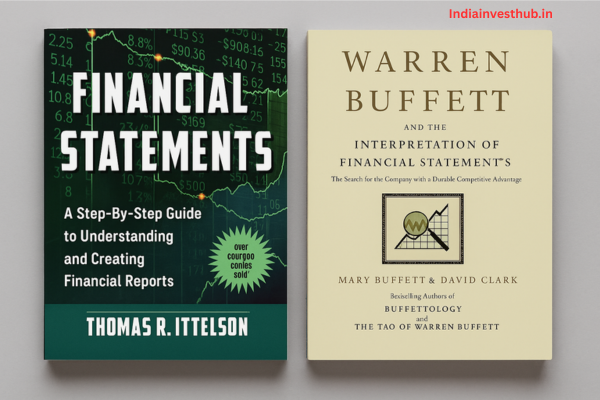
Financial Statements have always been at the heart of smart investing. Imagine this: in 2008, during the global financial crisis, many investors panicked and sold their holdings, but those who carefully studied financial reports identified undervalued companies and built fortunes when markets recovered. In fact, a 2019 CFA Institute survey found that 84% of professional investors ranked financial statement analysis as the most important skill in equity investing [Source: CFA Institute Global Investment Research 2019]. This shows how crucial it is to not only understand numbers but also interpret them wisely.
For readers who want to know what is the difference between Financial Statements and Warren Buffett and the Interpretation of Financial Statements, this article breaks down both books in detail. At Indiainvesthub, we understand that choosing the right book can set the foundation for your investing journey. That’s why we’ve created this comprehensive comparison to help you make the right choice.
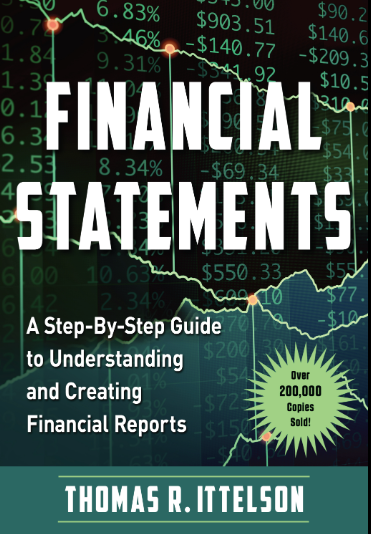
1) Financial Statements: A Step-by-Step Guide to Understanding and Creating Financial Reports by Thomas Ittelson – An Overview
Thomas Ittelson’s book is often described as the go-to guide for beginners in accounting and investing. Unlike traditional accounting textbooks, it explains financial statements in plain English with practical examples.
🔗Buy on Amazon
Price Range in India: ₹1,696 – ₹1,896
Key Features:
- Written for non-financial readers, making it beginner-friendly.
- Step-by-step explanation of the balance sheet, income statement, and cash flow statement.
- Focuses on understanding how businesses record and report transactions.
- Includes real-world examples and simplified illustrations.
Pros:
- Easy to read even if you have no accounting background.
- Covers both creation and interpretation of reports.
- Practical examples make concepts stick.
Cons:
- Some readers feel it’s too basic if you already know accounting.
- Does not go deep into investment decision-making.
Real Customer Experiences:
👉“This isn’t just for non-financial people. I started a career in finance as an equity analyst after working as an engineer for over 10 years, and this book has been very useful. I was hired for my industry background, but I am required to know—or at least learn—accounting fundamentals. This book clears up the often confusing world of accounting. As an engineer, it surprises me how many words in accounting can mean the same thing, but this book clears that up. It also clearly explains how the financial statements fit together—many try, but this book succeeds! It is also a great reference book.”
👉”Final book on understanding the budget for entrepreneurs. Disarming by his genius in exposing concepts. It is obviously structured on the budget “by function” of Anglo-Saxon and international type but can be easily adapted to European budgets “by nature”.
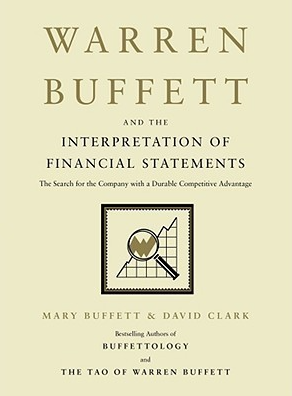
2) Warren Buffett and the Interpretation of Financial Statements by Mary Buffett and David Clark – An Overview
This book, written by Warren Buffett’s former daughter-in-law Mary Buffett and Buffett biographer David Clark, offers a value investor’s perspective. It teaches how Buffett himself interprets financial statements to find companies with long-term potential.
🔗Buy on Amazon
Price Range in India: ₹1,628 – ₹1,828
Key Features:
- Focus on Buffett’s method of analyzing balance sheets and income statements.
- Explains how to spot durable competitive advantages (“moats”).
- Investment-focused approach rather than just accounting fundamentals.
- Practical lessons from Buffett’s investment philosophy.
Pros:
- Perfect for investors who admire Buffett’s strategy.
- Helps you learn how to identify strong businesses from financial data.
- Includes simple formulas and real Buffett-style examples.
Cons:
- More about interpretation than teaching accounting basics.
- Some readers feel it oversimplifies Buffett’s complex thinking.
- May not be ideal for absolute beginners without basic financial knowledge.
Real Customer Experiences:
👉“Simply sensational book! Easy to read, extremely practical, and straight to the point—without beating around the bush or unnecessary clumsiness. I highly recommend it.”
👉“Warren Buffett’s The Interpretation of Financial Statements is an excellent and straightforward resource for anyone wanting to better understand financial statements. The concepts are explained in a clear, easy-to-digest manner, making it approachable for beginners while still insightful for more experienced readers. I found it especially helpful in breaking down how to evaluate companies the way Buffett does. I highly recommend it if you’re looking to improve your financial literacy!”
Top 10 Technical Analysis Books Every Trader and Investor Should Read
Financial Statements vs Warren Buffett and the Interpretation of Financial Statements – Comparison Table
Feature | Financial Statements by Thomas Ittelson | Warren Buffett and the Interpretation of Financial Statements by Mary Buffett & David Clark |
|---|---|---|
Image |  |  |
Audience | Beginners, small business owners, students | Investors, especially those inspired by Buffett |
Focus | Explains accounting basics and creating reports | Interpreting statements for investment decisions |
Style | Step-by-step teaching with examples | Investment-driven insights with Buffett’s methods |
Strengths | Easy to understand, practical | Focused on investing, Buffett’s wisdom |
Weaknesses | Too basic for advanced learners | Oversimplified for seasoned investors |
Best For | Those new to financial reporting | Those looking to apply Buffett’s approach |
Customer Ratings | 4.6 Out of 5 | 4.4 Out of 5 |
Buy |
Top 5 Best Books to Learn Fundamental Analysis for Beginners and Investors
FAQs – Financial Statements vs. Warren Buffett and the Interpretation of Financial Statements
Q1: Which book is better for beginners?
- 👉Financial Statements by Thomas Ittelson is better for absolute beginners who need accounting basics.
Q2: Which book is better for investors?
- 👉Warren Buffett and the Interpretation of Financial Statements is better if your main goal is investment analysis.
Q3: Can I read both?
- 👉Yes, many readers benefit from reading Ittelson first for fundamentals and then Mary Buffett’s book for investment insights.
Q4: Do these books overlap?
- 👉Only slightly. Ittelson explains “how to read” statements, while Mary Buffett explains “how to use them for investing.”
Conclusion:
So, Which Book Should You Choose?
- Choose Financial Statements by Thomas Ittelson if:
- You’re a beginner with no accounting background.
- You want to understand how to read and create reports.
- You need a clear, step-by-step learning approach.
- Choose Warren Buffett and the Interpretation of Financial Statements if:
- You already know the basics of financial reporting.
- You admire Buffett’s investment strategy and want to learn how he applies it.
- You want to identify companies with long-term potential.
- Read Both if:
- You want to build a strong foundation (Ittelson) and then learn how to apply it in real investing (Buffett).
In the end, your choice depends on whether you want to learn the language of accounting first or jump straight into the mindset of one of the greatest investors of all time. So, which book will you start with?


