Needs and Wants — In the modern hustle of climbing the career ladder, keeping pace with friends on social media and dealing with rising living costs, many of us find ourselves in a constant tug-of-war between what we must have versus what we want. Our story begins with Maya, a young professional in Bengaluru, who racked up credit-card bills not because she needed a new designer handbag, but because she could. She woke up one morning to discover that although her salary had increased, her savings rate had dropped — a pattern increasingly common today: the net financial saving rate in India slumped to just 5.3 % in FY 22, as households leaned more on borrowing instead of building a cushion.
At Indiainvesthub, we help readers like you master The Art of Financial Balance: Differentiating Between Needs and Wants. Let’s walk through how you can make this distinction and apply it in your everyday decisions—so you can create real financial freedom rather than living stretched and stressed.
Understanding the Concept of Needs and Wants:
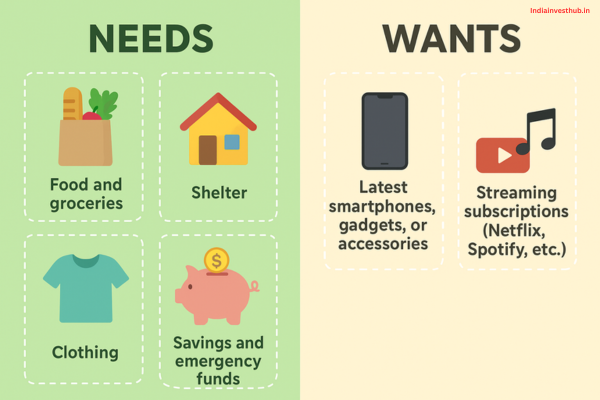
At the heart of financial balance lies the clear understanding of needs and wants. Needs are the essentials—things we cannot live without, such as food, housing, healthcare, and transportation. They form the foundation of our well-being and ensure our survival and security. Wants, on the other hand, are the extras that bring comfort, convenience, or enjoyment—like dining out, buying designer clothes, or upgrading to the latest smartphone. While wants are not inherently bad, confusing them with needs can lead to financial imbalance.

A 2024 Deloitte Consumer Trends report found that 64% of people struggle to distinguish between necessities and discretionary spending, often leading to overspending and reduced savings. By recognizing the difference between what sustains us and what merely satisfies us, we can make smarter financial choices and create a more intentional relationship with money.
The Psychology Behind Spending:

Why do we blur this line between needs and wants so often? The answer lies in human psychology. Spending on wants delivers immediate gratification — a dopamine hit — whereas prioritising needs and long-term goals requires delayed gratification. Add to this peer pressure, social media influence, and lifestyle inflation (as income goes up, spending goes up) and the result is easy: wants creep into budgets meant for needs. In fact, young adults are particularly at risk of this.
The 50/30/20 Rule: A Practical Framework
The 50/30/20 rule is an easy way to organize your income so you can balance needs and wants while still saving for the future. It divides your monthly take-home pay into three simple parts:
- 50% for Needs – These are your must-have expenses that keep your daily life running.
Example: rent, groceries, utility bills, transportation, and healthcare. - 30% for Wants – These are the nice-to-have things that make life more enjoyable.
Example: dining out, shopping, vacations, streaming subscriptions, or hobbies. - 20% for Savings and Debt Repayment – This portion helps you build financial security and prepare for future goals.
Example: savings accounts, investments, emergency funds, or paying off loans.
What Is Health Insurance and Why Is It Important
How to Identify and Prioritise Your True Needs:
To differentiate between your needs and wants, try these steps:
- List and categorise all your monthly expenses under “essential” and “non-essential”.
- Ask: “If I lost 20 % of my income tomorrow, which of these would I still need to pay?”
- Review big purchases: for example, a luxury car may fall into the “want” bucket unless it’s critical for your livelihood.
- Prioritise: ensure needs are fully covered before allotting money to wants.
The Role of Financial Goals in Decision-Making:

When you have clear financial goals — buying a home, early retirement, children’s education — your lens shifts. Instead of “Can I afford this want?”, you ask “Does this spending move me closer to or farther from my goals?” Those who confuse wants with needs often divert funds meant for investments into consumption, and end up compromising long-term stability. Research shows that households that consciously differentiate between needs and wants build stronger savings habits. So anchor your spending decisions around the goals.
Consequences of Confusing Wants with Needs:
What happens when you fail to make this distinction? Multiple risks: overspending, debt accumulation, low savings, inability to handle emergencies. In India, for instance, rising EMIs and debt share has been flagged as a threat to household financial health.
Maya’s story mentioned above reflects this: increased income but decreased saving because the “want” purchases snuck into the “need” budget. The result? Stress, less flexibility, fewer options. Ignoring the difference between needs and wants often means sacrificing future comfort for present indulgence.
Strategies to Maintain Financial Discipline:
Here are practical strategies to stay balanced:
- Automate savings: put aside your 20 % (or more) first so you’re not tempted to spend it.
- Monthly review: inspect actual spending vs budget and reclassify expenses.
- Use the “24-hour rule” for non-essential purchases.
- Set limits for wants: allocate a fixed amount per month and don’t exceed it.
- Avoid lifestyle inflation: as income grows, keep your “needs” slice stable and channel extra into savings/investments.
- Educate yourself: the more you understand your triggers, the easier to resist impulses.
How to Choose the Right Term Insurance Plan
Teaching Financial Balance to the Next Generation:
Teaching Financial Balance to the Next Generation is crucial for building lifelong money-smart habits. Children learn by observing, so parents and guardians should model responsible spending and saving behaviors. Introducing simple concepts like differentiating between needs and wants, setting small savings goals, and budgeting pocket money can make financial literacy practical and engaging. Tools such as jars for saving, budgeting apps for teens, or reward-based systems for achieving financial goals reinforce these lessons. Studies show that students who receive financial education are 30% more likely to adopt responsible spending habits, laying the foundation for a secure financial future.
Conclusion: Finding Harmony Between Comfort and Security
In the journey of money management, the real art lies in balancing comfort and security: enjoying life today while protecting tomorrow. By truly mastering the difference between needs and wants, you create a budget that serves both your lifestyle and your long-term dreams. Let Maya’s story become your inspiration rather than your cautionary tale.
Are you ready to redefine which expenses are truly essential, which are optional, and take control of your financial future?